During the wastewater treatment process, sludge is generated. Sludge is a residual semi-liquid material with a moisture content of approximately 98%.
Sludge has long been a serious challenge for the water treatment industry, as it increases environmental risks and significantly raises disposal costs when handled in liquid form. Sludge dewatering is the process of reducing waste volume to enable efficient disposal. Dewatering separates sludge into solid and liquid fractions, thereby minimizing waste.
Depending on the viscosity of the sludge, required capacity, and available budget, several different sludge dewatering methods are used.
Belt filter
Belt filters are among the less intensive sludge dewatering methods, based on gravitational dewatering. This results in a higher water content in the final product, but such systems are often more cost-effective. An alternative is the belt vacuum filter, which accelerates the dewatering process.
Belt filters use filter belts that transport sludge through several stages, allowing water to drain from the sludge under the influence of gravity or vacuum. This process is repeated 2–3 times until primarily the solid fraction remains.
Centrifuge
Centrifuges provide a higher degree of separation compared to belt presses, producing solid sludge with a lower moisture content. They require little installation space but may involve higher capital costs.
A centrifuge operates by rotating a cylindrical bowl containing sludge. As the bowl spins at high speed, centrifugal force separates water and solid particles based on density. This results in two separate streams: treated wastewater, which is returned for further processing, and solid material, which is disposed of.
Chamber (plate-and-frame) filter press
Chamber filter presses are available in high-pressure and low-pressure versions. High-pressure systems can achieve lower moisture content, as higher pressure inside the chambers allows for greater solid accumulation from the sludge.
A chamber filter press operates by simultaneously filling multiple chambers. These chambers are separated by filter plates, which divide the sludge into water and solid fractions.
Sludge dewatering processes
Before dewatering, sludge is conditioned using organic chemicals such as flocculants and coagulants, or mineral chemicals such as iron salts and lime.
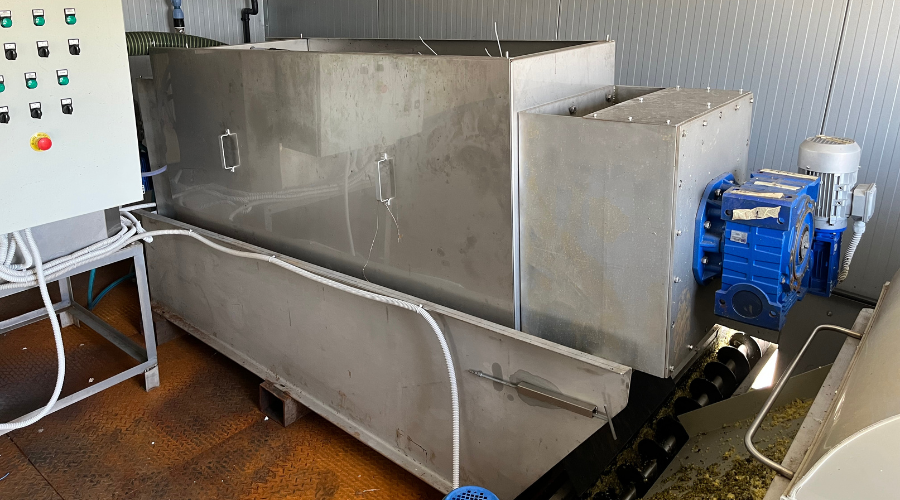
After conditioning, the sludge is thickened, often using a screw drum. Thickening processes concentrate the sludge by removing part of the water, thereby increasing the content of dry solids. During thickening and dewatering, two products are formed:
- solid sludge, which is transported to sludge storage or disposal sites;
- process water, which is returned to the beginning of the treatment plant.
Advantages of sludge dewatering
Environmentally friendly
Sludge dewatering is an environmentally safe process regulated by legislation. All wastewater treatment plants must be equipped with liquid sludge dewatering systems. The process significantly reduces the volume of waste requiring disposal.
Reduced transportation costs
Sludge disposal is a costly process. Dewatering equipment reduces expenses related to sludge storage and transportation.
Lower risk of spills and leaks
Consistently dry sludge reduces the risk of spills or leaks during transport. Spillage is a major concern for truck operators, whereas dry sludge cakes with high solids content significantly minimize this risk.
Reduced waste volume
Sludge dewatering reduces both the volume and weight of waste prior to disposal, leading to lower disposal costs.
Easy automation
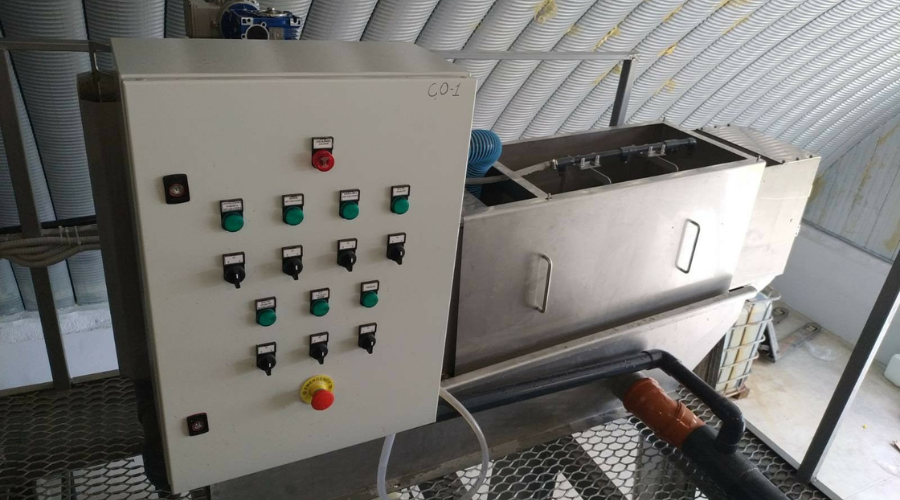
Although sludge dewatering equipment is sometimes considered labor-intensive, it is, in fact, easily automated. For example, sludge presses can be equipped with advanced control systems, automatic belt washing units, and mechanical sludge discharge systems, ensuring continuous operation and seamless integration with the plant’s main control system.
Conclusions
Sludge dewatering is primarily aimed at waste minimization, reducing both sludge volume and weight. This contributes to overall cost efficiency, particularly by lowering disposal and transportation costs.
In addition, stabilized sludge can be reused, handled more safely, and poses a lower health risk. Both private and public sectors are generally required to dispose of sludge in ways approved by regulatory authorities, in accordance with organizational requirements and environmental safety standards.