
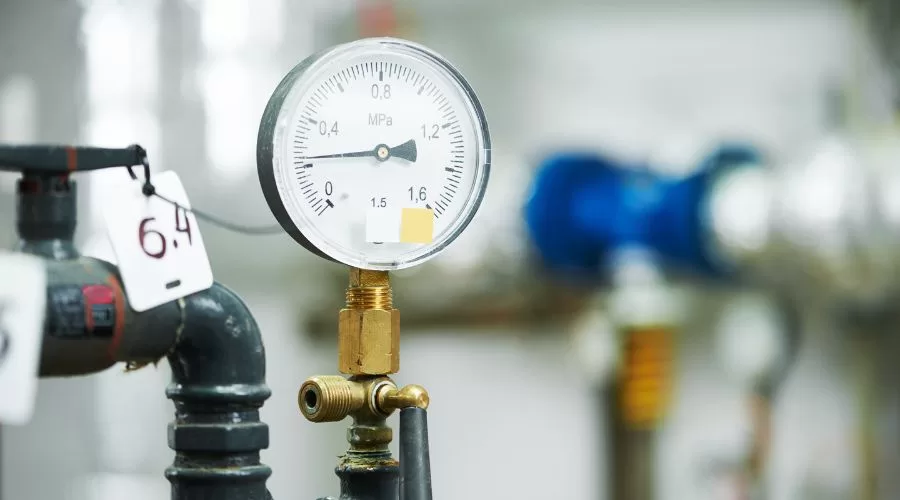
Boiler plants provide heating for residential buildings, entire cities, and settlements. These installations are used to heat public institutions and production facilities at factories and plants. Preliminary chemical water treatment for boiler plants makes it possible to soften water (remove calcium and magnesium salts) and to purify it from various impurities and chlorine. This increases boiler plant efficiency and extends the service life of the equipment.
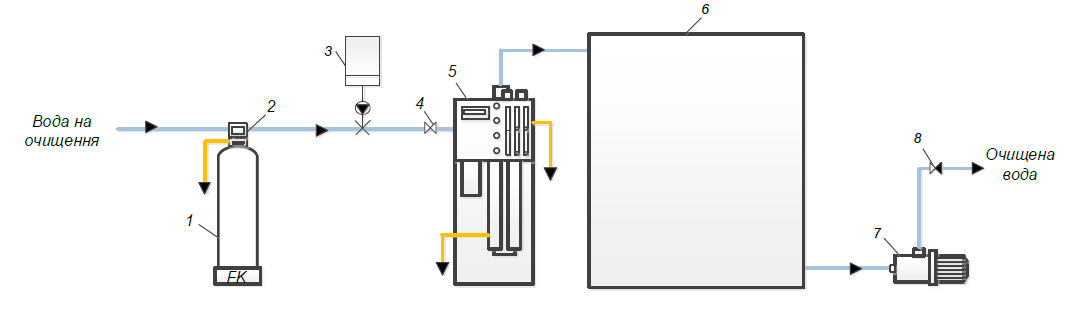
Typical Layout of a Boiler Chemical Water Treatment System
ПAdvantages of Boiler Chemical Water Treatment
The following advantages of boiler chemical water treatment should be highlighted:
- prevention of problems caused by the use of untreated (hard) water, which ultimately is more cost-effective than repairing damaged equipment;
- preliminary water treatment for boiler plants eliminates the risk of emergencies and equipment failure caused by scale formation;
- chemical water treatment systems for boiler plants do not require continuous maintenance — only periodic servicing and operational monitoring are necessary.
High-quality water treatment for boilers prevents scale formation and reduces the risk of corrosion of boiler equipment. This ensures uninterrupted operation of boiler plants throughout their entire service life.
Basic Configuration of a Boiler Water Treatment Line
The basic configuration of a boiler water treatment line includes the following equipment:
- a filter for removing mechanical impurities from municipal water supply; it protects water treatment equipment and automation systems from mechanical and coarse suspended particles;
- a water softening unit that reduces water hardness to the required levels;
- a make-up water storage tank; during regeneration of the softening unit, this tank supplies water to the system;
- a dosing station that increases the pH level of the working medium using chemical reagents, reducing corrosion and extending equipment service life.
Water Treatment for Steam Generators
As with boiler water preparation, water treatment for steam generators provides water softening and iron removal and eliminates mechanical particles from the working medium.
The water treatment process for steam generators consists of several stages:
- water from a borehole or municipal supply is fed into a storage tank, from which it is pumped to a mechanical filtration unit;
- after mechanical impurities are removed, the water enters an aeration column, where oxidation of various impurities and dissolved iron occurs;
- at the next stage of water preparation for boilers or steam generators, oxidized impurities and iron are precipitated; this process takes place in a catalytic iron-removal filter with specialized media;
- the clarified water is then softened, reducing its hardness to near-zero levels;
- after treatment, clean water is supplied to a storage tank, from which it is pumped directly into the steam generator;
- a flow meter is installed on the pressure line supplying water to the steam generator; it measures water consumption and transmits data to a dosing pump, which injects a special reagent into the water to reduce acidity.
It should be noted that in each case, our specialists select an optimal set of equipment tailored to the client’s requirements, ensuring the required water quality at optimal operating costs.
What Happens If a Boiler Plant Operates Without Water Treatment
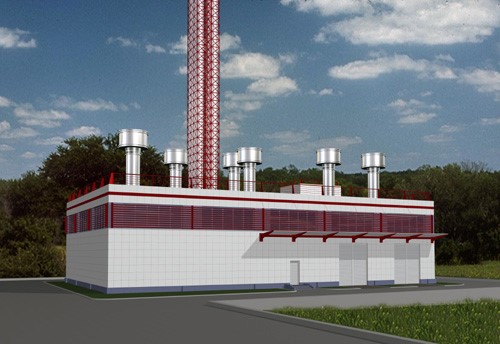
If preliminary water treatment for boilers is not carried out, this not only reduces equipment efficiency but also significantly shortens its service life. Heating costs or expenses for water heating for other purposes increase substantially, and repair, replacement, and maintenance costs rise sharply.
If boiler water treatment is not implemented, contaminants present in untreated water lead to a number of serious problems:
- Large colloidal and mechanical contaminants such as scale, rust, clay, or sand quickly clog pipelines, significantly reducing their internal diameter. This also leads to failure of shut-off valves and pumping equipment.
- Hardness salts and other poorly soluble salts (carbonates and sulfates of magnesium and calcium, silicates, various copper and manganese compounds) precipitate and form deposits on metal surfaces, reducing heat transfer efficiency. As a result, boiler output decreases, energy consumption increases, and equipment service life is significantly reduced.
- Aggressive gases dissolved in water, such as CO₂ and O₂, which have oxidative properties, act as catalysts for corrosion processes inside boilers.
- High concentrations of chlorides in untreated water cause chloride corrosion.
- Foaming agents (petroleum products, alkalis, and phosphates) promote foam formation. This foam contains impurities that subsequently deposit on boiler turbine blades and lead to contamination of the generated steam.
Methods of Boiler Water Treatment
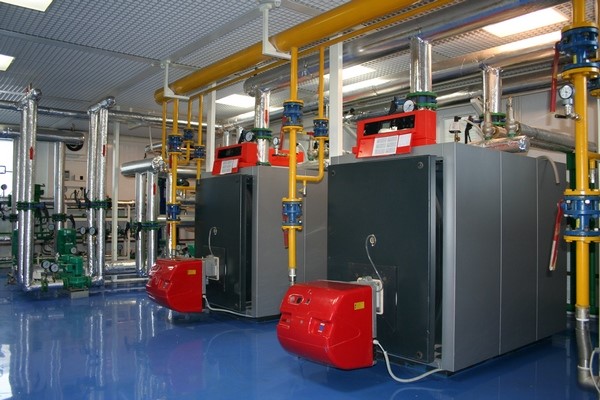
Engineers at ZIKO have designed and successfully implemented boiler water preparation solutions at facilities of leading Ukrainian manufacturers producing various types of products. Based on many years of experience, our engineers identify two of the most effective water treatment technologies prior to boiler feed — ion-exchange water softening and molecular water purification using reverse osmosis.
Water Softening Using Ion-Exchange Resins
Untreated water from municipal supplies, surface sources, or boreholes contains inorganic salts in varying concentrations, primarily magnesium and calcium. When water reaches certain temperatures, these substances precipitate and form scale on the surfaces of boilers, pipelines, water heaters, and other equipment.
To prevent such issues, boiler water preparation must include water softening using filters with ion-exchange resins. Such a filter is installed at the boiler inlet. As water passes through the resin media, hardness salts are replaced with sodium ions. In other words, calcium and magnesium salts are substituted with sodium salts, which are readily soluble and do not form scale.
Boiler Water Preparation Using Reverse Osmosis Technology
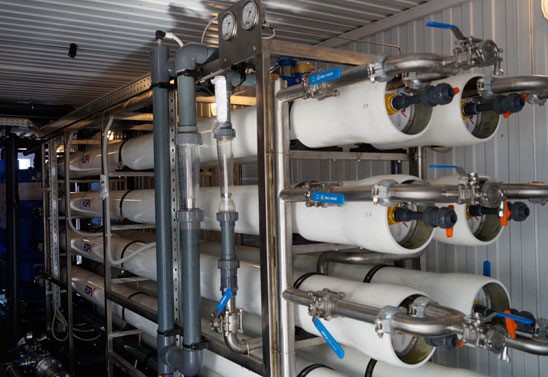
Reverse osmosis is one of the most effective methods of boiler water preparation. Feed water is pumped under pressure through a polymer membrane that retains up to 99.8% of all contaminants. Substances that negatively affect boiler operation are removed, including:
- Na⁺ (sodium);
- NO₃ (nitrate);
- Cl⁻ (chloride);
- SiO₄ (silicic acid);
- SO₄ (sulfate);
- HCO₃ (alkalinity).
After reverse osmosis treatment, almost distilled water is supplied to the boiler.
Main Stages of Water Preparation in Boiler Plants
During boiler water preparation, the maximum possible amount of impurities must be removed from the water. Water supplied from municipal networks, surface sources, or boreholes usually contains a large amount of minerals and fine suspended particles. To prevent failures, accidents, and to extend equipment service life, their removal is typically carried out according to the following scheme:
- preliminary (mechanical) filtration to remove large inclusions (up to 100 μm);
- iron removal and reduction of water hardness using continuous or periodic softening equipment;
- maximum removal of remaining contaminants and gases using reverse osmosis.
The methods of boiler water preparation and the types of equipment used are determined based on the composition of the feed water after laboratory analysis. For example, preliminary treatment of borehole water may require the following filters:
- mechanical filter;
- iron removal filter;
- reverse osmosis system or an ion-exchange water softening module.
There are both mandatory and additional stages of water preparation for industrial boiler plants. Mandatory stages include:
- Preliminary mechanical treatment. At this stage, large particles, scale, stones, silt, and sand are removed, which could otherwise damage filters, system components, and heating equipment.
- Water softening and maximum molecular-level purification using reverse osmosis systems and ion-exchange resin filters.
Typical Water Treatment Errors in Boiler Plants
During the design and installation of boiler water treatment systems, the following errors may occur:
- no water analysis is performed to determine the type and concentration of contaminants for proper equipment selection;
- the preliminary water treatment system, including dechlorination, is absent or equipped with ineffective components;
- no individual calculation is carried out for softening and demineralization systems — ion-exchange filters and reverse osmosis units;
- improper adjustment of deaerators;
- absence of corrective water conditioning.
Chlorine in water negatively affects reverse osmosis membranes, reducing water quality and shortening membrane service life. Water not treated for iron causes membrane fouling and corrosion of boiler and pipeline metal surfaces. Organic impurities and suspensions lead to deposits inside pipelines (reducing flow capacity) and on heating surfaces (lowering equipment efficiency and increasing energy consumption).
Equipment and Turnkey Water Preparation Solutions for Boiler Plants
ZIKO offers equipment for chemical water treatment of boiler plants as well as turnkey solutions for water purification for steam generators. We supply and install complete systems and components for water treatment and water preparation systems throughout Ukraine.
The company guarantees high quality of boiler water treatment systems and full compliance of equipment with quality and safety standards.
The presence of company representatives in all regions of the country enables us to ensure timely delivery, fast and high-quality installation, and commissioning of water preparation and water treatment systems.
For all inquiries, customers may consult our managers by submitting a request via the form below. We also accept equipment supply requests via the email address listed in the Contacts section.