

 Укр
Укр  Рус
Рус 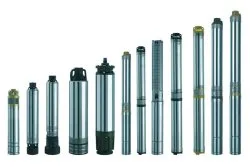
In a country house, it is often difficult to ensure a stable water supply, as there is no centralized water distribution system. The optimal solution is the use of high-quality deep-well pumps for boreholes or submersible pumps for wells. Unlike surface pumps, they operate reliably even in areas where the water level is critically low.
How to Properly Select Pumps for a Borehole
Deep-well pumps for boreholes are capable of continuously pumping water to a lift height of up to 300 meters. Pumps designed for wells provide water lifting to a height of up to 20 meters.
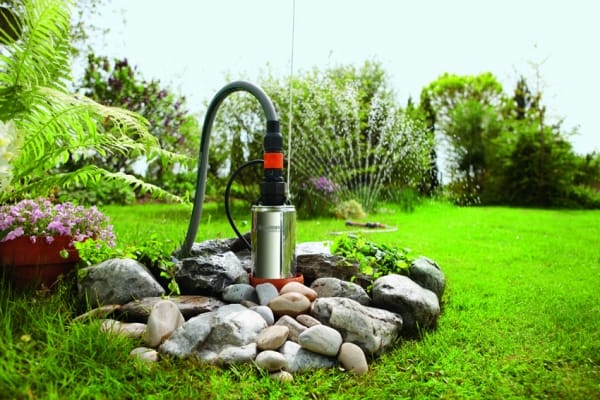
When selecting a pump, you should primarily focus on the following parameters:
- the depth of the borehole or well;
- the borehole diameter (the pump diameter must be 10 mm smaller);
- yield (measured in cubic meters of water; this indicates the time required for the water level to recover at a specified rate of consumption);
- dynamic water level (variable level during pumping);
- static water level (constant level).
These parameters can be measured independently. The depth, yield, and diameter are specified in the borehole passport. To determine the water level, a well or borehole pump is lowered to a depth of 20 meters; after 60 minutes, the change in the water level is measured, and the difference in meters is recorded.
The yield of boreholes cannot be calculated with absolute accuracy, as water recovery is slower in winter and faster in summer. Precise calculation can only be performed by a specialist using a dedicated formula.
It is very important to clearly understand the purpose for which you are selecting a deep-well pump, especially considering that such equipment is not inexpensive. If the pump is intended to serve a country house, summer house, or cottage, you should calculate how many users (water intake points) need to be supplied.
For example, if you have two kitchen taps, a shower, a washing machine, and a toilet, this equals 5 users. The average consumption of each is 0.5 cubic meters per hour.
5 × 0.5 = 2.5 m³/h.
Therefore, you need a pump with a capacity of at least 2.5 m³/h.
A model with higher capacity is required if the pump will also perform additional functions, such as irrigation during the summer period. This ensures full water supply in the house even when agricultural work is carried out simultaneously.
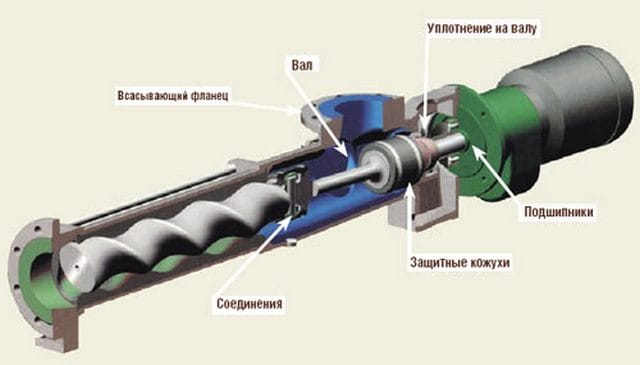
Water pumps for wells are divided into four basic types according to the water intake method:
- vibration;
- screw (auger);
- centrifugal;
- vortex.
The most popular well pumps are centrifugal and vibration models. Centrifugal pumps are better suited for significantly contaminated water.
How to Choose Deep-Well Pumps Based on Additional Parameters
The most productive borehole pumps are multistage units, assembled from interconnected sections. They are designed for pumping water from the greatest depths. Specialized models are capable of pumping water containing sand particles of up to 180 g/m³.
The most reliable deep-well pumps are those with a housing and hydraulic components, including impellers, made of stainless steel grades AISI 304 and AISI 316. Such pumps are used for artesian wells, mineral water extraction, as well as for water containing oil particles, sand, or acids. These models are highly durable and exhibit excellent abrasion resistance.
ZIKO helps customers free of charge to select deep-well pumps in any region of Ukraine. We will recommend the optimal model and a leading global manufacturer specifically for your site. To receive a specialist consultation, please submit a request using the form below this text.


