

 Укр
Укр  Рус
Рус 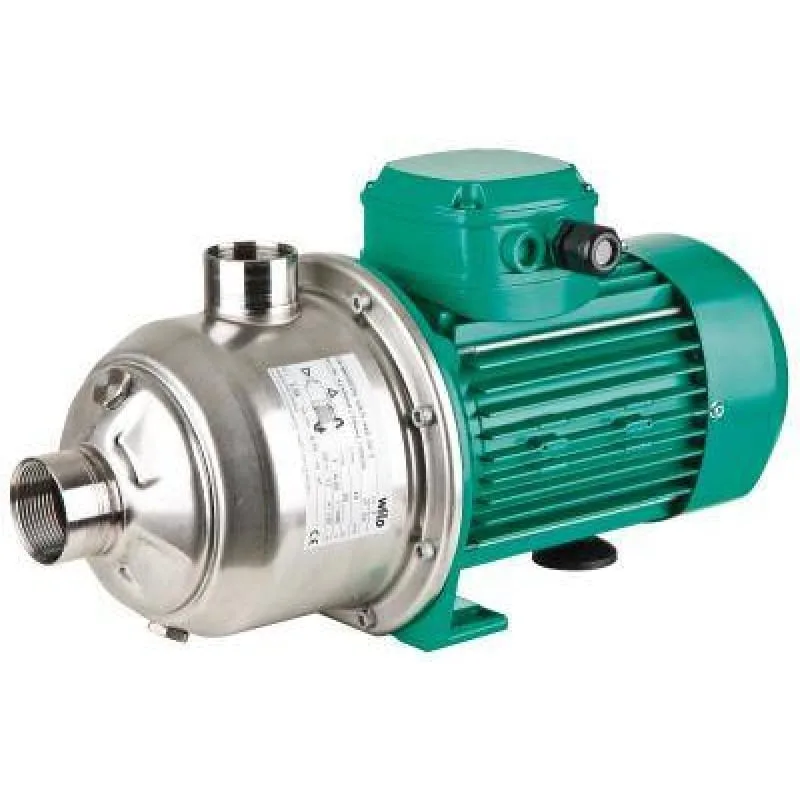
Surface water pumps are convenient devices for pumping water, irrigation, and water supply for country houses and summer cottages. Pumping stations can also be used for heating systems.
Advantages of water pumps
They are inexpensive to operate and maintain. They are easy to transport and install — it is enough to move only the unit itself or the hose connected to it. The depth of the water source can be minimal.
A surface water pump is convenient because it can pump water both from a well and from an open water body: a lake or a river. Therefore, the unit is well suited for gardeners, summer residents, and owners of country plots with ponds. It is also installed for pumping water from shallow boreholes — up to 9 meters. The hose is lowered into the well, while the pump itself remains on the ground, so there is no need to select it by diameter.
Disadvantages
One of the disadvantages of such a pumping unit is that it must be protected from heat and rain. For this purpose, the pump is installed under a canopy or in a shed, annex, or basement. The power and head are usually sufficient to lift water from depths of 10 meters and more. If you plan to lift water from greater depths, you need to purchase a submersible (deep-well) water pump.
Installation
Surface pumps are installed:
- directly on the ground;
- on a floating platform if water is pumped from a pond or river;
- in a pit with a gravel-filled bottom (indoors).
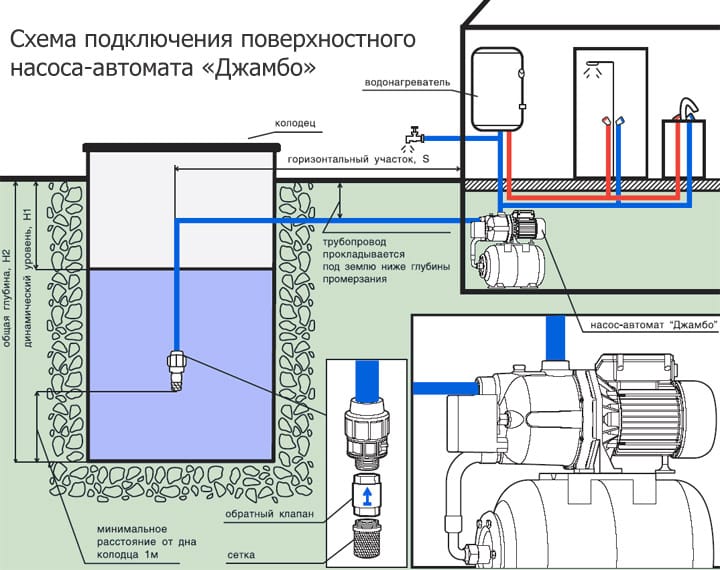
Conditions for installing a surface pump
- Air temperature — only above zero, from 0 °C.
- Suction depth — up to 8 meters.
- When installed during the cold season, the pump must be moved from open air to a dry indoor space.
Parameters of a surface pump
It is necessary to correctly calculate the suction depth (the distance from the pump to the water surface). This parameter directly affects the choice of the installation location. Hydraulic resistance is created in the pipeline, therefore the suction depth decreases if the pump is located far from the water source.
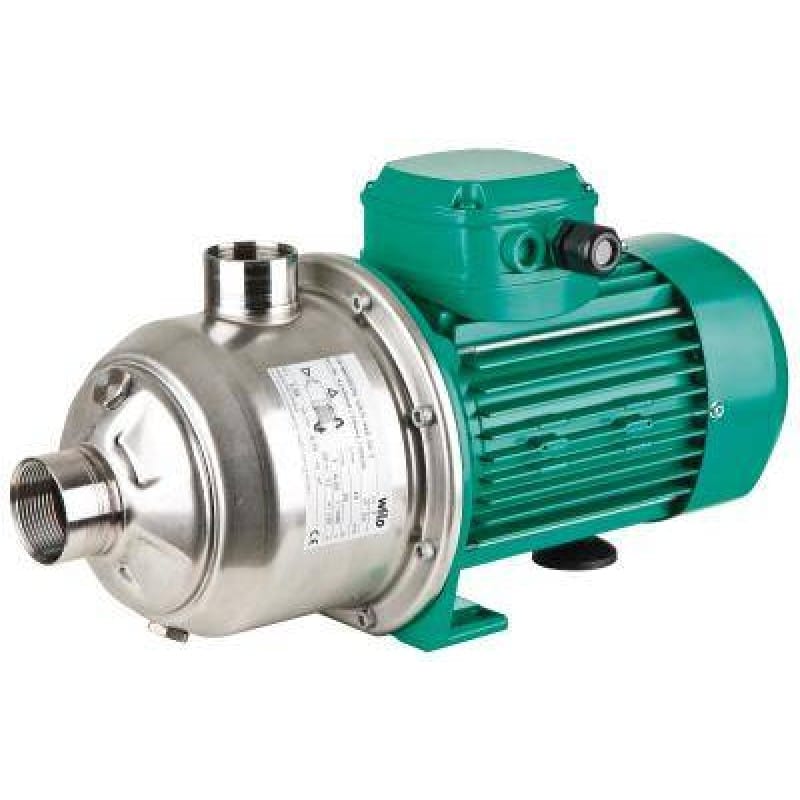
When calculating the suction depth, the ¼ rule is used. This means that for every 1 meter vertically, 4 meters horizontally are required. In other words, if a surface pump is installed 8 meters away from a well or borehole, the suction depth is automatically reduced by 2 meters.
Capacity
Capacity is measured in cubic meters per hour. Household surface pumps usually have a capacity in the range of 3–6 m³/h.
How to calculate water consumption
These are approximate values; actual consumption depends on a household’s water needs.
- Irrigation of a garden, orchard, or vegetable beds — up to 2 m³/h
- Water supply for a summer house or country home — from 3 m³/h and higher, depending on the number of consumption points (taps, toilets, etc.)
Head
Head is measured in meters of water column. For private houses, cottages, and summer homes, this value typically ranges from 30 to 80 meters. The maximum system pressure at which the pump control relay operates correctly is 2.8–3.5 atm.
Motor power
Household surface water pumps with standard characteristics (head 40–80 m, average flow rate 3–6 m³/h) are equipped with electric motors rated at 0.7–1.8 kW. Power and other parameters vary depending on the manufacturer and operating characteristics of the unit.
The most common models are single-phase surface pumps designed for a 220 V power supply. Some models are equipped with three-phase motors intended for 380 V power.
Diameter
The average pipeline diameter is 32 mm, which corresponds to a 1-inch pump connection. It is connected to the pipeline using an adapter coupling. For power supply, a cable with a cross-section of at least 2.5 mm² is recommended.
To prevent the pump from drawing in silt and dirt from the bottom during operation, the suction inlet should be installed at least 0.5 meters above the bottom. Modern models are also equipped with a check valve and a coarse filter.
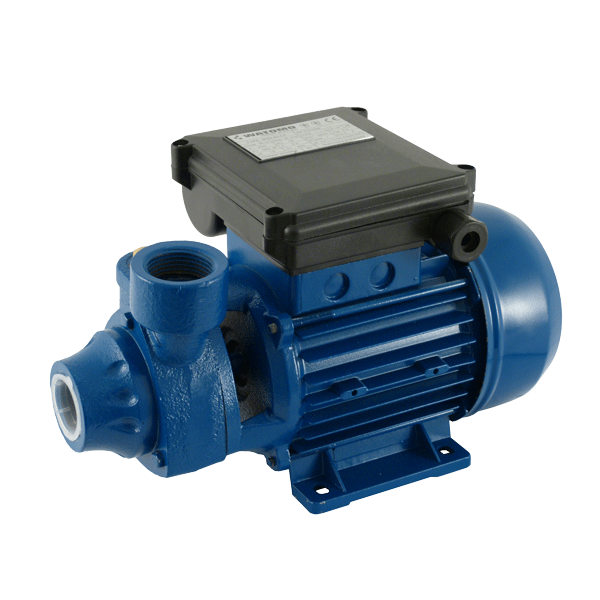
When purchasing a surface pump, a pressure switch and a hydroaccumulator are usually ordered additionally. For customer convenience, modern manufacturers offer these components as complete assemblies with full equipment. Such solutions are provided by global industry leaders such as Wilo, Pedrollo, Lowara, and others.
If you do not want to assemble a water supply system from separate components, you can rely on ready-made solutions from the ZIKO company (Lviv).
We will calculate all surface pump parameters according to your needs and help you select the best model free of charge anywhere in Ukraine.


