

 Укр
Укр  Рус
Рус 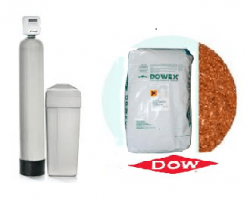
What Is Hard Water?
When water is described as “hard,” it means that it contains a higher-than-normal concentration of minerals, primarily calcium and magnesium.
Excessively hard water can have numerous negative effects on consumers. According to sanitary standards defined by the World Health Organization (WHO), the concentration of magnesium and calcium salts in drinking water should not exceed 1–2 mg-eq/L. Elevated hardness not only causes visible limescale deposits on tiles, fittings, and dishes, but also accumulates on household appliances and can lead to serious malfunctions. It has been established that just 1 mm of limescale on a heating element increases electricity consumption by 10–15%. This affects kettles, coffee machines, washing machines, dishwashers, heaters, boilers, pipes, pipe bends, and other equipment.
Hard water also increases the consumption of detergents and cleaning agents. As a result, the efficiency of heat pumps and heating systems decreases, leading to significant losses and noticeable additional energy consumption. To prevent these issues, water softening systems are used.
What Is Water Softening?
Water softening is an ion-exchange process used to remove elements that cause water hardness — most commonly calcium and magnesium ions. The most effective way to soften water is by using a water softening system connected directly to the water supply, where the ion-exchange process occurs continuously.
What Is a Water Softening System?
Water softening systems are designed to remove hardness salts from water at concentrations of up to 15–20 mg-eq/L. The system consists of a column made of high-strength plastic resistant to corrosion and mechanical damage. It is equipped with an automatic control valve manufactured by Clack Corp. (USA). The system also includes a brine tank, where a salt solution is prepared for the regeneration process.
Water is softened by means of a special ion-exchange resin, where ion exchange takes place. During this process, calcium and magnesium ions are removed and replaced with sodium ions. Such water is safe for household appliances, as sodium does not form scale deposits.
Attention. When selecting a water softener, an important prerequisite is to perform a preliminary water hardness analysis. This parameter determines the system size, the amount of resin media, and the consumption of consumables (tablet salt). ZIKO offers a free water analysis covering 22 key parameters (including nitrites, nitrates, ammonia, pH, iron, and others).
How Does a System Based on Dowex Filter Media Operate?
Dowex HCR S/S is a strongly acidic cation-exchange resin developed by The Dow Chemical Company (USA) for water softening in residential applications, as well as at commercial and industrial facilities.
The resin has a high ion-exchange capacity, which ensures excellent operating performance and the ability to effectively remove hardness salts. The material is physically, chemically, and thermally stable, making it suitable for long-term operation in water softening systems.
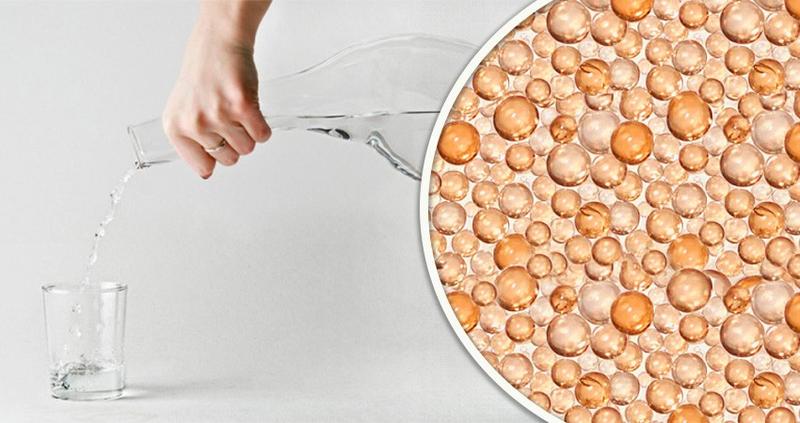
Water passes through a filter containing active ion-exchange resin.
The components of the filtration media remove hardness salts from the water and replace them with sodium ions, which are safe for use. The hardness salts remain in the filter, while the treated water continues either to the next treatment stage or, depending on system settings, is supplied directly to the consumer. When the amount of accumulated salts in the resin reaches a critical level, the system initiates regeneration by flushing with a saline solution.
Regeneration, i.e. restoration of the filter’s operating capacity, occurs automatically using water and tablet salt:
- a salt solution passes through the filter, during which calcium ions in the resin are replaced with sodium ions, meaning ion exchange takes place;
- the salts responsible for water hardness are neutralized and removed;
- the displaced salts are flushed into the sewer system, after which the unit is ready for further operation.
How Often Should Salt Be Added to the Softener?
The more frequently regeneration occurs, the more often salt needs to be replenished. The brine tank should typically be checked once a month and should always be at least half full to ensure maximum water softening efficiency.
It is also recommended to check the operation and settings of the controller, especially after sudden or prolonged power outages.
ZIKO also invites existing and prospective customers to sign a service agreement for scheduled maintenance of water treatment systems. This includes regular system inspections, valve flushing, and water quality checks before and after the system.
Key Advantages of the System
Water softening is fast and efficient, with minimal pressure loss, due to the use of ion-exchange resin manufactured by Dow Chemical:
- The control valve performs multiple functions, ensuring uninterrupted system operation.
- It precisely determines regeneration frequency based on water consumption, peak loads, and a user-convenient time schedule.
- The filter housing is made of high-strength plastic resistant to damage and corrosion.
- The cost of treated water is low, resulting in significant savings.
The service life of a filter based on Dowex media is confirmed by warranty and typically составляет 5–7 years. In practice, with proper operation, the actual service life may reach 10–20 years.
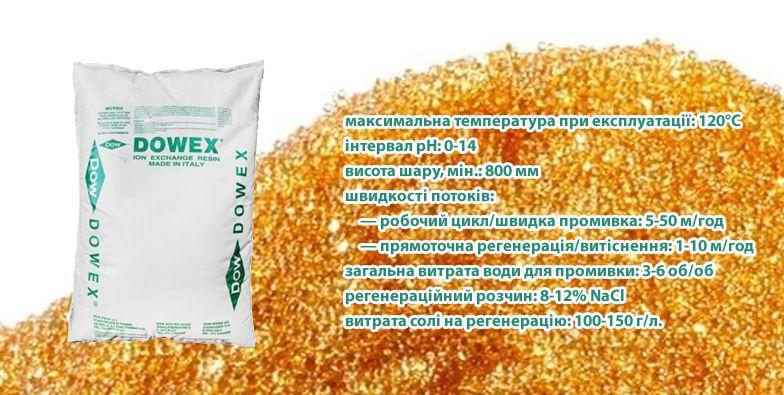
Recommended Operating Conditions for Dowex
Please contact us — ZIKO specialists will advise you on the selection and proper use of the system. Detailed information can be obtained by calling the phone number listed in the Contacts section.


