

 Укр
Укр  Рус
Рус 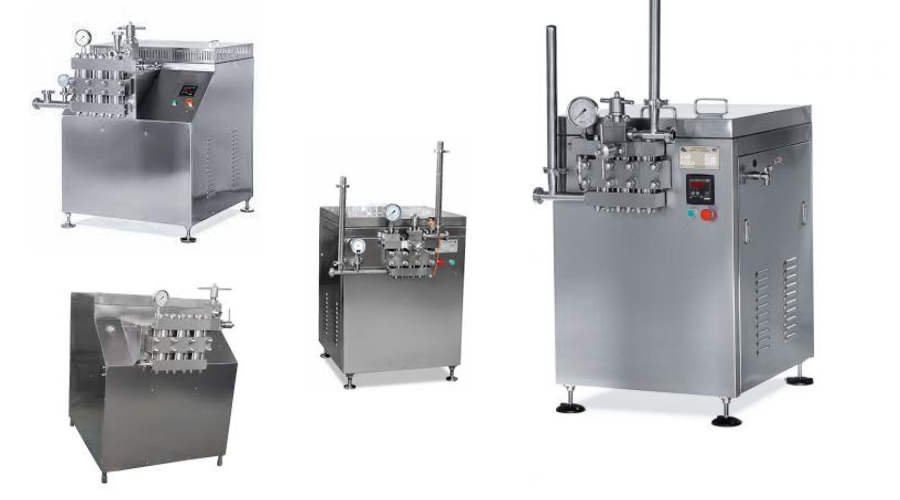
The company ZIKO is a representative of leading European manufacturers of homogenizers.
It is widely known that the main raw material at dairy enterprises is milk. As a result of established technologies and a number of technological processes, cheese, fermented dairy products, butter, and other products are produced. Milk is a valuable natural raw material whose composition has long been and continues to be the subject of extensive research. Most often, milk has been analyzed and described from the perspective of its impact on the human body and physiology. However, when focusing on the technical properties of milk, it acquires completely different characteristics. Knowledge of these properties is equally important both for production technology and for proper nutrition of adults and children.
So, what is milk? It is nothing more than an emulsion. An emulsion is a system of two or more immiscible liquids. From a thermodynamic point of view, it is an unstable system that tends to separate. One of the liquids forming the system is the dispersion phase (the solvent), while the other is the dispersed phase. In the case of milk, the dispersed phase is fat.
The homogenization process is a widely used method for reducing particle size in liquid and semi-liquid food products. As a result, homogenization increases the number of dispersed particles. The entire process occurs due to the action of shear forces, which significantly increase the stability of a dispersion system composed of two immiscible substances. Homogenization aims to fragment larger fat globules into smaller ones — down to 2 μm — in order to eliminate creaming, i.e., fat separation in milk. The homogenization process is typically carried out at a temperature of 70–75°C.
There are generally four main types of homogenizers.
The first type includes high-speed mixers — mixers equipped with high-speed turbines or propeller-type agitators, used for initial emulsification of low-viscosity liquids.
The second type is pressure homogenizers, in which piston pumps force liquid products under high pressure (approximately 10–70 MPa) through a narrow calibrated gap of about 0.3 mm at very high speeds, reaching several thousand meters per second. When used for milk, these devices reduce the size of fat globules to below 1 μm.
The third type includes colloid mills. These are primarily disc grinding machines of various designs, in which a small gap (0.05–1.3 mm) is formed between a vertical rotating disc (operating at 3,000 to 15,000 rpm) and a stationary disc, or between two counter-rotating discs, generating very high shear forces. These mills are particularly useful for homogenizing high-viscosity liquids.
The fourth type is ultrasonic homogenizers, in which high-frequency mechanical waves in the range of 18–30 kHz are generated by a vibrating plate. These waves cause cyclic stresses and cavitation in liquids with relatively low viscosity, resulting in emulsions with droplet sizes of approximately 1–2 μm. This type of homogenizer is used in the production of ice cream, fat emulsions, sauces, and for dispersing powders in liquids.
In essence, homogenization produces a uniform and stable mixture of substances that do not normally mix. The structural stability of the homogenized system is increased, and the effect of the process is most often associated with parameters such as the homogenization valve gap size, applied homogenization pressure, and the temperature of the homogenized medium.
During fluid flow and changes in cross-sectional area, both fluid velocity and static pressure change rapidly, resulting in deformation and complete breakup of fat globules. Under such flow conditions, cavitation and fragmentation of fat globules occur. The most important parameter affecting homogenization efficiency is pressure, the increase of which positively influences the homogenization effect. However, higher pressure requires larger equipment size, the use of high-strength materials, and robust sealing systems, impacting overall equipment dimensions, energy consumption, and operational durability.
It should also be noted that increasing pressure reduces particle size only up to a certain limit. This is because temperature is also a critical parameter, alongside pressure, influencing the homogenization process. Temperature affects fat globule dispersion, post-homogenization aggregation tendencies, milk color, and protein stabilization. According to available data, milk supplied to the homogenizer should have a temperature between 45°C and 65°C. Fat content is also important — higher fat concentration reduces homogenization efficiency.
From a technical standpoint, there is also a relationship between the length of the homogenization gap and homogenization pressure that determines the expected process outcome, taking into account the concentration of the fat phase in the product.
It is also necessary to select appropriate methods for evaluating the homogenization process in order to reliably and rationally assess its effectiveness. One of the main indicators of homogenization efficiency is the average diameter of fat globules, which closely correlates with homogenization pressure. Typically, the percentage ratio of fat globules of a specific size to the total number of dispersed particles is analyzed. Two primary methods are used to assess homogenization efficiency: microscopic and sedimentation methods.
The microscopic method involves measuring fat globule size by placing a liquid sample on a microscope slide and determining globule size using a micrometer. In each field of view, the total number of fat globules and the number exceeding 2 μm in diameter are counted. The result is calculated by subtracting the percentage of globules larger than 2 μm from the total number of globules.
The sedimentation method is based on milk’s tendency to separate fat from the aqueous phase, which is undesirable in industrial production. Evaluation is performed by placing 250 ml milk samples into Snellen cylinders and storing them in a refrigerator at 5–10°C for 2–3 days, depending on the adopted standard (American or Danish). After this period, fat content is measured in the upper and lower sections of the sample. Homogenization is considered effective if the calculated homogenization efficiency (ratio of fat content in the upper part to the lower part) is ≥ 90%.
Homogenization is widely used in the food industry for the production of milk, dairy products, juices, and baby food. Its advantages include improved structural stability, increased emulsion stability, and prevention of quality deterioration phenomena such as bitterness or phase separation. Milk meets the definition of an emulsion, as fat droplets are dispersed in an aqueous solution containing sodium, calcium, and potassium salts, with casein acting as an emulsifier.
From a physiological perspective, the emulsion form of milk enhances fat digestibility in the human body and helps maintain acid–base balance. Milk destined for packaging undergoes several technological operations: purification, fat standardization, homogenization, heat treatment (pasteurization or sterilization), filling, storage, and distribution.
Industrial homogenizers, unlike laboratory units, operate at much larger scales and are designed to meet the production capacity requirements of dairy plants. Homogenizers consist of two main components: a piston pump, responsible for generating high pressure, and a homogenization valve, which disperses fat particles and reduces their size. The process is mechanical, repeatable, and performed without oxygen access, ensuring high product quality and preventing undesirable reactions.
Homogenization can be single-stage or multi-stage (usually two-stage). Single-stage homogenization uses one homogenizing valve with a single pressure regulation system. Multi-stage homogenization can be achieved using multi-stage valves or multiple sequential valves with individual pressure regulation systems. Pressure can be adjusted mechanically or hydraulically, with gap height regulated by pressing the disc against the valve.
Manufacturers of homogenizers for dairy plants include Spomasz, OptiFlow, Hommak, Tetra Pak, and GEA Group, which offer solutions tailored to individual production needs. Their portfolios include homogenizers for small-scale laboratory use as well as large industrial applications.
For example, Spomasz offers homogenizers with capacities ranging from 300 l/h to 10,000 l/h, suitable for dairy processing. HM-type homogenizers can operate independently or in combination with pasteurizers and sterilizers, forming integrated pasteurization and homogenization lines. While homogenizers are generally energy-intensive and costly to maintain, modern developments focus on using more durable components and improving overall equipment design.
To receive consultation regarding technical specifications, equipment availability, and pricing, please submit a request via our website or contact us using the phone numbers listed in the Contacts section.


