

 Укр
Укр  Рус
Рус 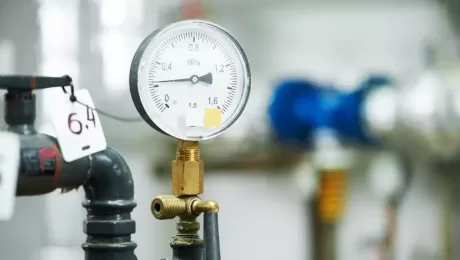
Water Treatment for Industrial Boilers and Steam Generators
02 August 2023
Boiler plants provide heating for residential buildings, entire cities, and settlements. These installations are used to heat public institutions and production facilities at factories and plants. Preliminary chemical water treatment for boiler plants makes it possible to soften water (remove calcium and magnesium salts) and to purify it from various impurities and chlorine. This increases
- Published in Рішення, Системи водопідготовки – рішення
Reverse Osmosis Systems for Apartments, Houses, and Offices
02 August 2023
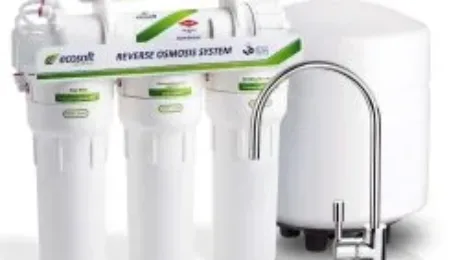
Reverse osmosis systems are designed to purify water by forcing it through a special reverse osmosis membrane under high pressure. As a result, the consumer receives permeate — crystal-clear water — while impurities are discharged into the sewer system, forming a concentrate. Today, reverse osmosis is the most advanced solution for providing water with characteristics
- Published in Рішення, Системи зворотного осмосу – рішення
Filtrasorb-300 Chlorine Water Treatment System
02 August 2023
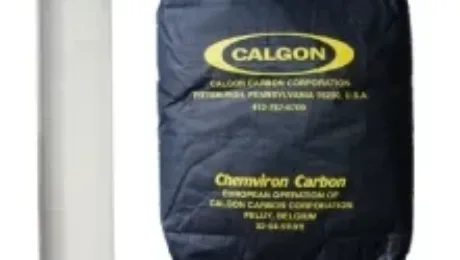
Filtrasorb 300 belongs to the range of Filtrasorb granular activated carbon. Filtrasorb 300 is produced by steam activation of bituminous coal. The Filtrasorb 300 granules are formed by agglomeration (sintering) of the finest coal fractions (coal dust), rather than by crushing larger coal particles. Filtrasorb 300 features high adsorption capacity and a large number of
- Published in Рішення, Системи очищення води – рішення
Ultraviolet Water Disinfection
02 August 2023
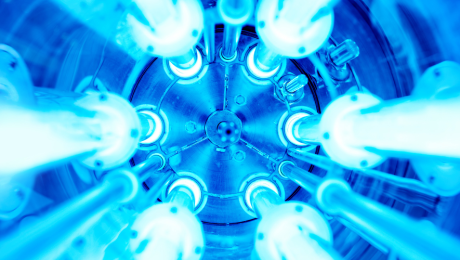
Thanks to continuous improvement of this technology, an ultraviolet water lamp provides greater purification capabilities than natural ultraviolet radiation. This method of industrial water treatment is widely used across various sectors: The use of ultraviolet radiation in industrial water preparation is a cost-effective, practical, and health-safe method. By destroying pathogenic microorganisms and bacteria, an ultraviolet
- Published in Знезараження води – рішення, Рішення

Water from natural sources rarely meets sanitary standards in its original composition. Well water often contains significant amounts of dissolved iron and hydrogen sulfide. This can be immediately identified by a characteristic unpleasant metallic odor or the smell of rotten eggs. Drinking such water is not only unpleasant but also potentially hazardous to health. Hydrogen
- Published in Рішення, Системи очищення води – рішення
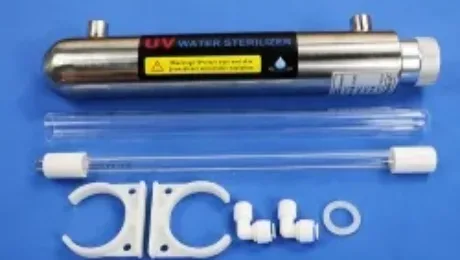
Water Disinfection Using an Ultraviolet Lamp
02 August 2023
Alongside various filtration media, an ultraviolet water lamp provides a high level of water purification from different types of contaminants. An ultraviolet disinfection unit treats drinking water supplied from boreholes and wells by eliminating pathogenic microorganisms and microbiological contaminants. Why Is Ultraviolet Water Treatment Necessary? After chlorination at water treatment plants, water should not contain
- Published in Побутове знезараження води – рішення, Рішення
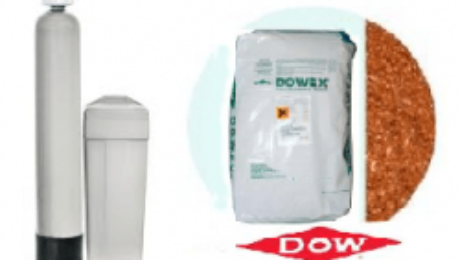
Water Softening Systems Based on DOWEX Ion-Exchange Resins
02 August 2023
What Is Hard Water? When water is described as “hard,” it means that it contains a higher-than-normal concentration of minerals, primarily calcium and magnesium. Excessively hard water can have numerous negative effects on consumers. According to sanitary standards defined by the World Health Organization (WHO), the concentration of magnesium and calcium salts in drinking water
- Published in Рішення, Системи очищення води – рішення
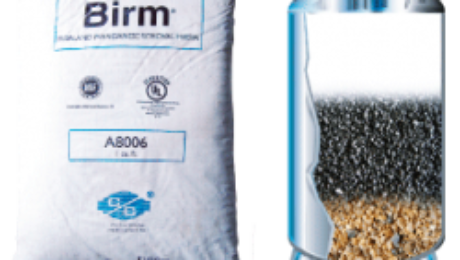
Birm — Iron Removal from Water
02 August 2023
With a proportion of 4.7%, iron is one of the most common elements in the Earth’s crust. The legally established maximum allowable concentration of iron in drinking water is 0.3 mg/L. This limit is primarily set for aesthetic reasons — sediment formation and orange staining. At concentrations of 0.5 mg/L and higher, the taste of
- Published in Рішення, Системи очищення води – рішення
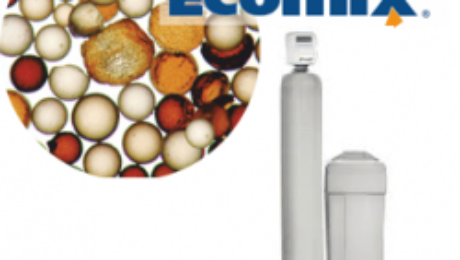
ECOMIX® — Integrated Water Treatment Systems
02 August 2023
ECOMIX® integrated water treatment systems are an optimal solution for treating water with high concentrations of hardness salts, iron compounds, ammonium, manganese, and organic contaminants. The filtration process is carried out in a single treatment stage, which fundamentally distinguishes this system from conventional multi-stage solutions. System Configuration The system is designed as a single-column unit
- Published in Рішення, Системи очищення води – рішення
Консультація спеціаліста
Напишіть нам:


Лідер інженерії води


