
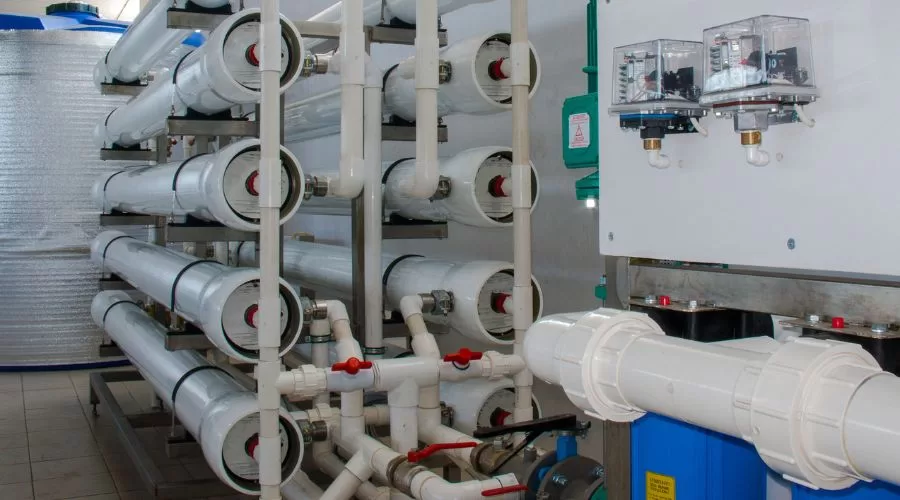
Ultrafiltration Systems for Industry
Industrial ultrafiltration systems are among the most advanced solutions in water preparation and treatment. They effectively remove contaminants, chemical compounds, and microorganisms by passing water through membranes with extremely small pores. These pores allow only purified water to pass while retaining contaminants under low operating pressure.
Industrial ultrafiltration is highly effective in removing pathogenic microorganisms (bacteria, protozoa, parasite eggs, fungi), organic compounds affecting water color, as well as colloidal particles such as clay, oxidized iron, and algae.
This technology is particularly in demand in areas with limited access to potable water, including settlements, hospitals, and military facilities. One of the key advantages of ultrafiltration for enterprises is that it operates without chemical reagents, making it an environmentally safe water treatment method.
Advantages of Ultrafiltration for Industry Compared to Conventional Water Treatment Methods
- reliable protection against microorganisms and suspended particles;
- filtrate quality does not depend on raw water quality;
- effective removal of chlorine-resistant pathogenic microorganisms;
- the concentrate generated during ultrafiltration consists only of contaminants, with significantly less sludge compared to other treatment methods;
- reduced footprint due to compact system design;
- no use of chemical reagents;
- preservation of the natural mineral composition of water, unlike reverse osmosis systems.
Industries Using Ultrafiltration Technology
Pharmaceutical Industry
Ultrafiltration is used for purification and concentration of pharmaceutical products. It allows efficient removal of proteins, viruses, and other contaminants from pharmaceutical solutions while preserving active substances. The process enables solution concentration by removing water or solvents and is valued for its speed and resource efficiency, reducing production time and operational costs.
Food Industry
In food processing, ultrafiltration is used to separate molecules of different sizes from liquids such as juices, milk, and syrups. It removes proteins, fats, and microorganisms while preserving beneficial components, vitamins, and minerals. The process ensures high product quality without thermal treatment.
Dairy Industry
Ultrafiltration is a key process in milk processing and dairy production. It allows separation of milk components, removal of excess water and impurities, and concentration of proteins and valuable nutrients. This technology improves product quality, increases protein content, reduces sugar levels, enhances shelf life, and improves production efficiency while lowering transportation and processing costs.
Electronics Industry
In electronics manufacturing, ultrafiltration is used for water purification to protect sensitive equipment from microorganisms, chemicals, and solid particles. It is also applied to gas purification processes, ensuring high purity levels required for electronic production and maintaining operational reliability.
Biotechnology
Ultrafiltration enables separation, purification, and concentration of proteins, cells, and microorganisms based on size and physical properties. It is widely used in biotechnological processes to improve efficiency, product concentration, and quality of biological materials.
Beverage Production
Ultrafiltration is extensively used in the production of beer, wine, juices, milk-based beverages, and other drinks requiring high purity standards. It preserves natural taste and aroma, extends shelf life, and ensures removal of harmful contaminants while retaining beneficial substances.
Energy Production
In energy generation, ultrafiltration is used for purification of water utilized in thermal power systems. Clean water improves equipment efficiency and longevity. Ultrafiltration is also applied for water recycling, reducing environmental impact and conserving water resources.
How Industrial Ultrafiltration Works
Industrial ultrafiltration systems purify water using membrane modules. Under pressure or gravity, the feed liquid passes through ultrathin membranes. Clean water penetrates the membrane pores, while contaminants remain on the surface. This process effectively removes large molecules, bacteria, viruses, and suspended solids, significantly improving water quality.
Operating Principle of Ultrafiltration Membranes for Enterprises
Purified water passes through microscopic pores, while contaminants and concentrates are retained. The degree of purification depends on pore size. Ultrafiltration membrane elements consist of hollow fibers made of hydrophilic material with pore sizes ranging from 0.01 to 0.1 μm.
Typical dimensions include an outer diameter of 1.3 mm and an inner diameter of 0.7 mm. Membrane elements are housed in pressure vessels and assembled into modules according to the required system capacity.
A key advantage of ultrafiltration systems is their high purification efficiency without chemical additives, making them ideal for industries with strict water purity requirements.
Ultrafiltration Membrane Materials
Most ultrafiltration membranes are manufactured from polymers, including:
- polyacrylonitrile;
- polyimide;
- aliphatic polyamide;
- cellulose derivatives;
- polyvinylidene fluoride (PVDF);
- sulfonated polysulfone.
In some cases, ceramic (inorganic) membranes are also used.
Ultrafiltration is similar in principle to reverse osmosis, microfiltration, and nanofiltration, with the key difference being that ultrafiltration preserves the mineral composition of water. Capillary membranes are particularly effective as a final stage of water treatment.
When ultrafiltration is used as pretreatment, subsequent purification stages become more efficient due to removal of nearly all suspended solids.
Equipment and Automation
Industrial ultrafiltration systems commonly use membrane elements manufactured by Dow Chemical and Ecosoft.
The ultrafiltration process can be fully automated using control systems based on Clack Corp (USA) control valves, ensuring stable operation and ease of management.
To learn more about industrial ultrafiltration systems, pricing, and installation options, please contact us. Our specialists will help you select the most effective ultrafiltration solution for your enterprise.