
Очисні споруди для ОТГ і сільських громад
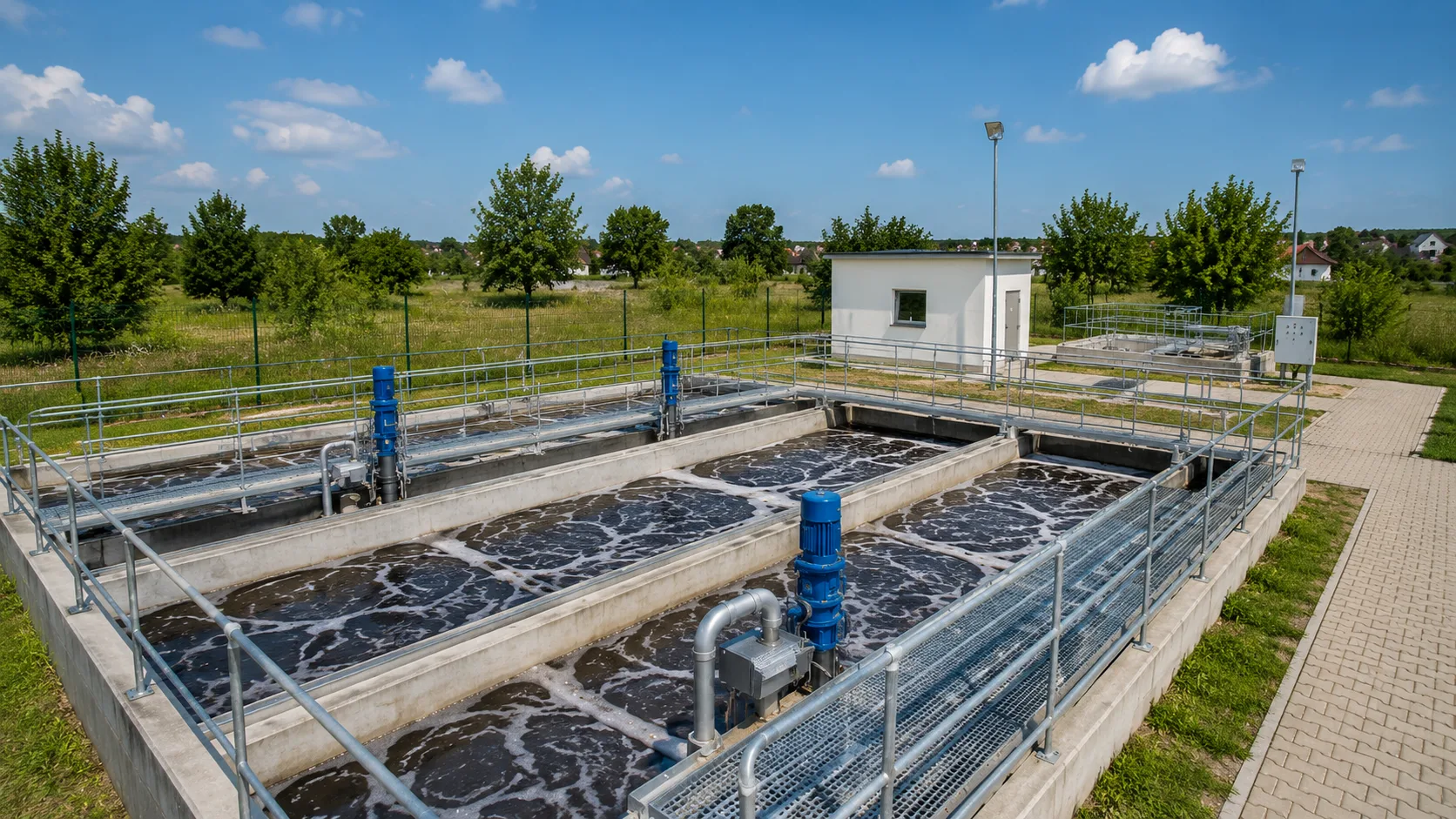
Wastewater treatment · Communities and hromadas
Treatment plants for amalgamated communities (hromadas) and rural communities
From treating the wastewater of a single school or outpatient clinic to sewerage for an entire village without central networks. One rotating-biodisc technology scales from a single building to 2000 m³ per day and is built up in phases to match the community budget — no odour or noise, with a 5–20-metre sanitary protection zone.
Who in the community needs treatment plants
Schools, kindergartens, lyceums
Wastewater from educational facilities in a village with no sewerage. Children are nearby — so it must be odour- and noise-free: BioDisc® is installed right next to the building, with a 5–20-metre sanitary zone.
Medical facilities
Outpatient clinics, rural health posts, hospitals. Reliable biological treatment, stable even under variable load throughout the day.
Administrative and public buildings
Village council, administrative service centre (TsNAP), cultural centre, market, sports complex. A local plant instead of a cesspit.
Villages and settlements without sewerage
An entire settlement: a modular plant that grows in phases — from the first street to the scale of a small town.
Why cesspits and old treatment plants are a dead end for a community
The traditional situation
- Groundwater pollution. Cesspits and filtration fields poison wells — a health risk for residents.
- Worn-out treatment plants. Old Soviet-era facilities fail to meet the standard — fines from the environmental inspectorate and orders to comply.
- Expensive to build “from scratch”. Full-scale treatment plants all at once are too heavy a load on the community budget.
- No documentation for a tender and phased financing.
Local biodisc plants
- One technology — from a single building (BioDisc®) to a whole settlement (PlanetTEK → large MITA biodiscs).
- Build-up in phases — to fit subventions, grants and budget capacity.
- No odour or noise, 5–20 m sanitary zone, discharge to the environment per standards.
One technology — from a school to a whole village
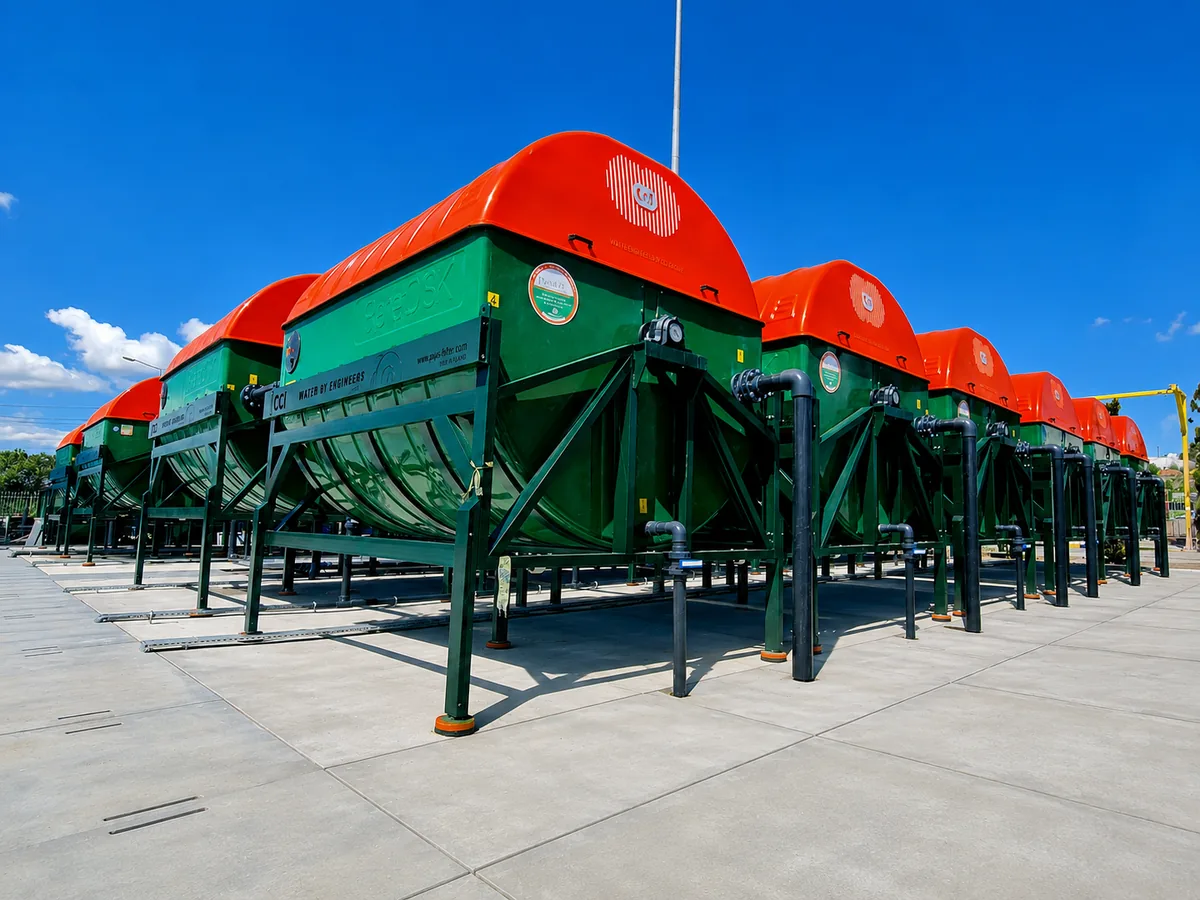
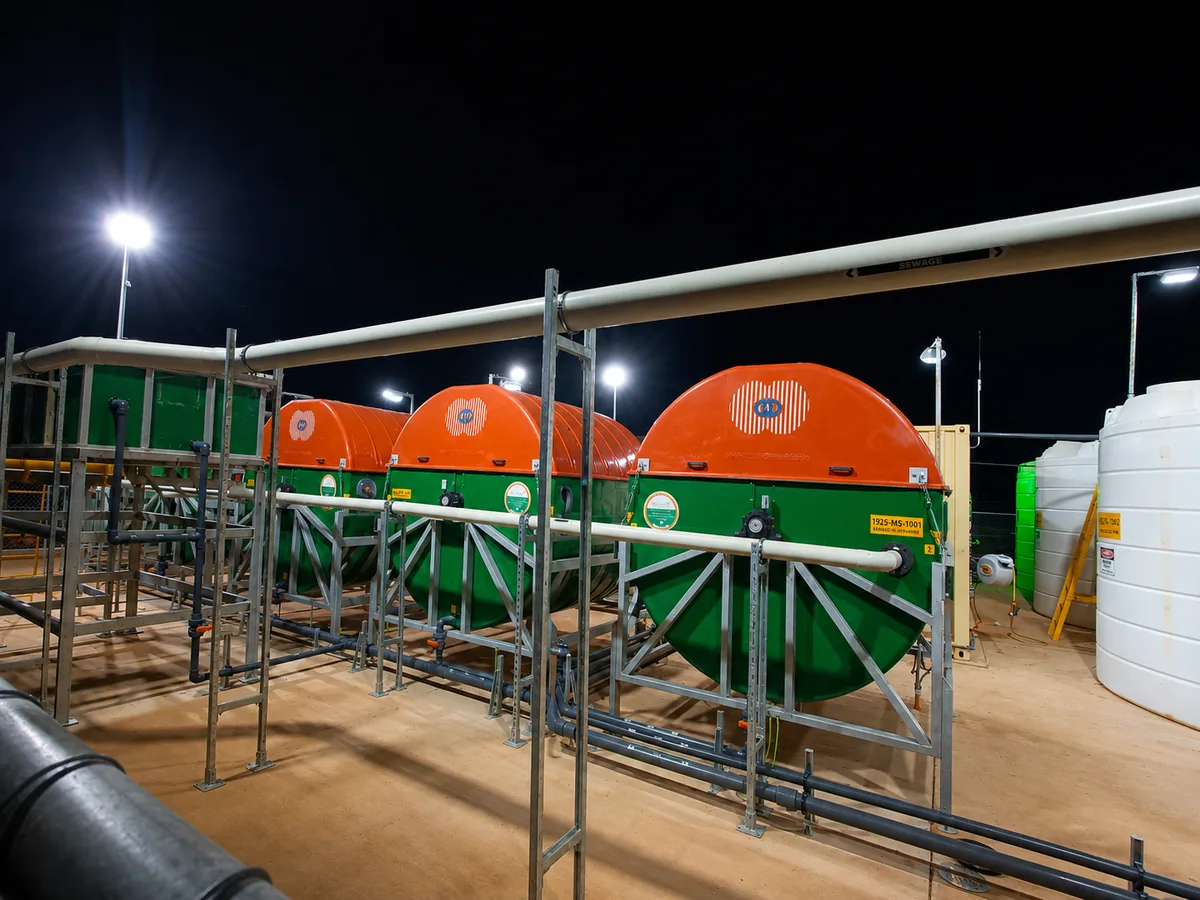
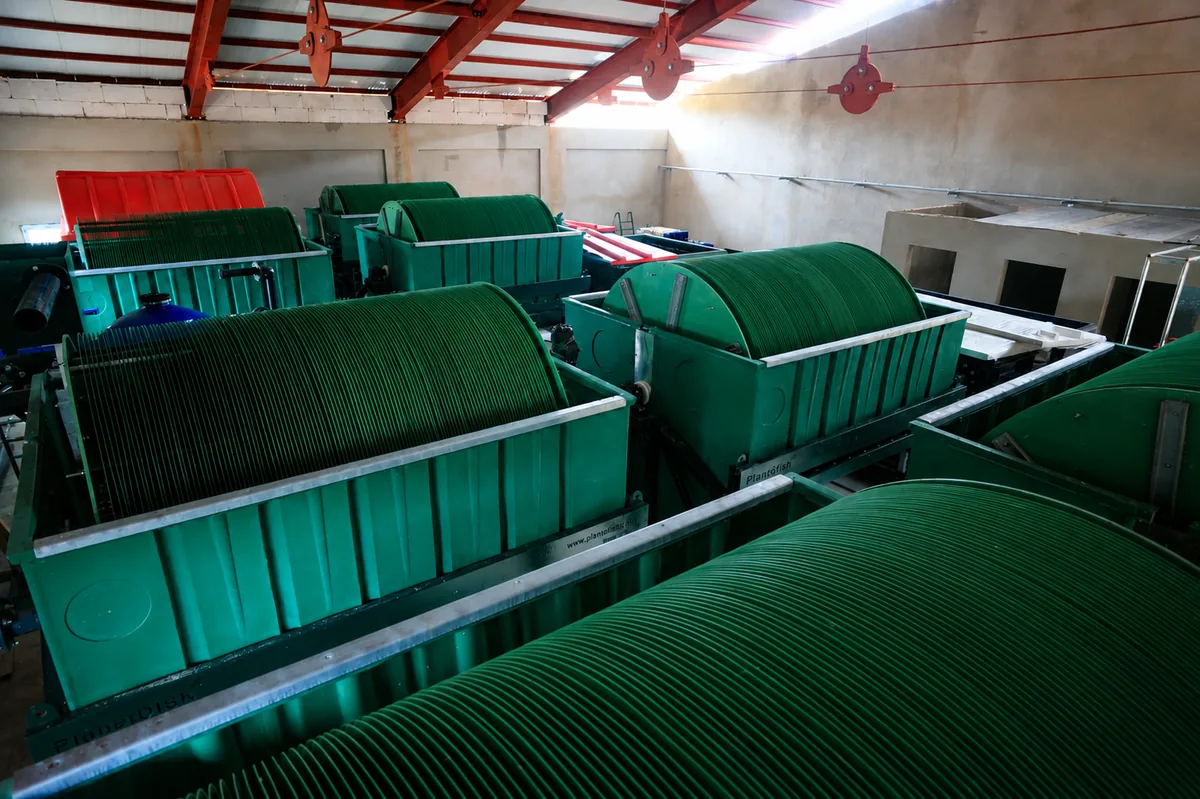
At the core are rotating biodiscs: a biofilm on the rotating discs treats wastewater without air blowing, quietly and energy-efficiently. For a single building, a turnkey BioDisc® monoblock is a good fit; for a whole settlement — the modular PlanetTEK, which is built up in phases, and the large MITA (Biorulli®) biodiscs for the scale of a small town. Capacity is added in phases — to match the community budget and financing.
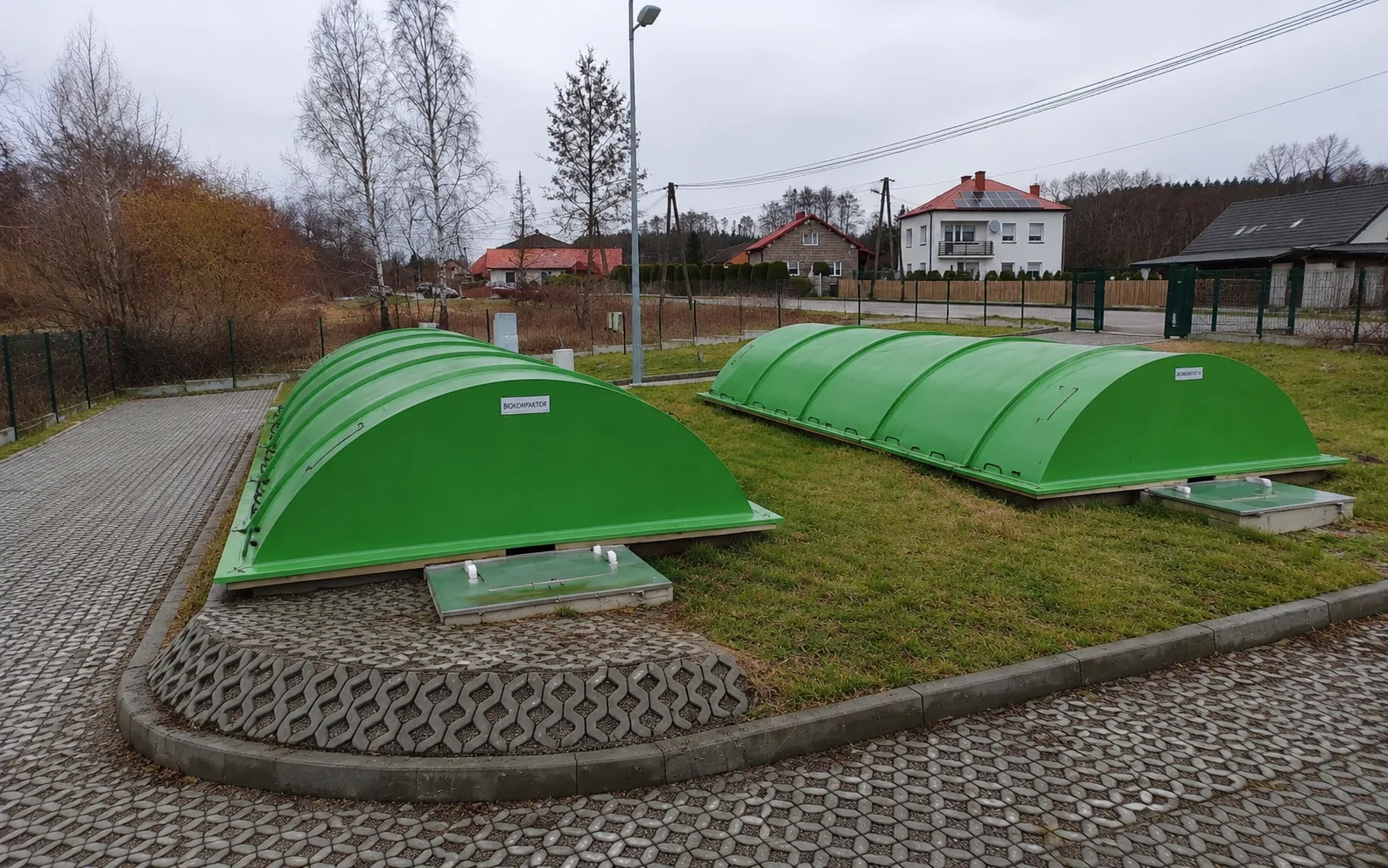
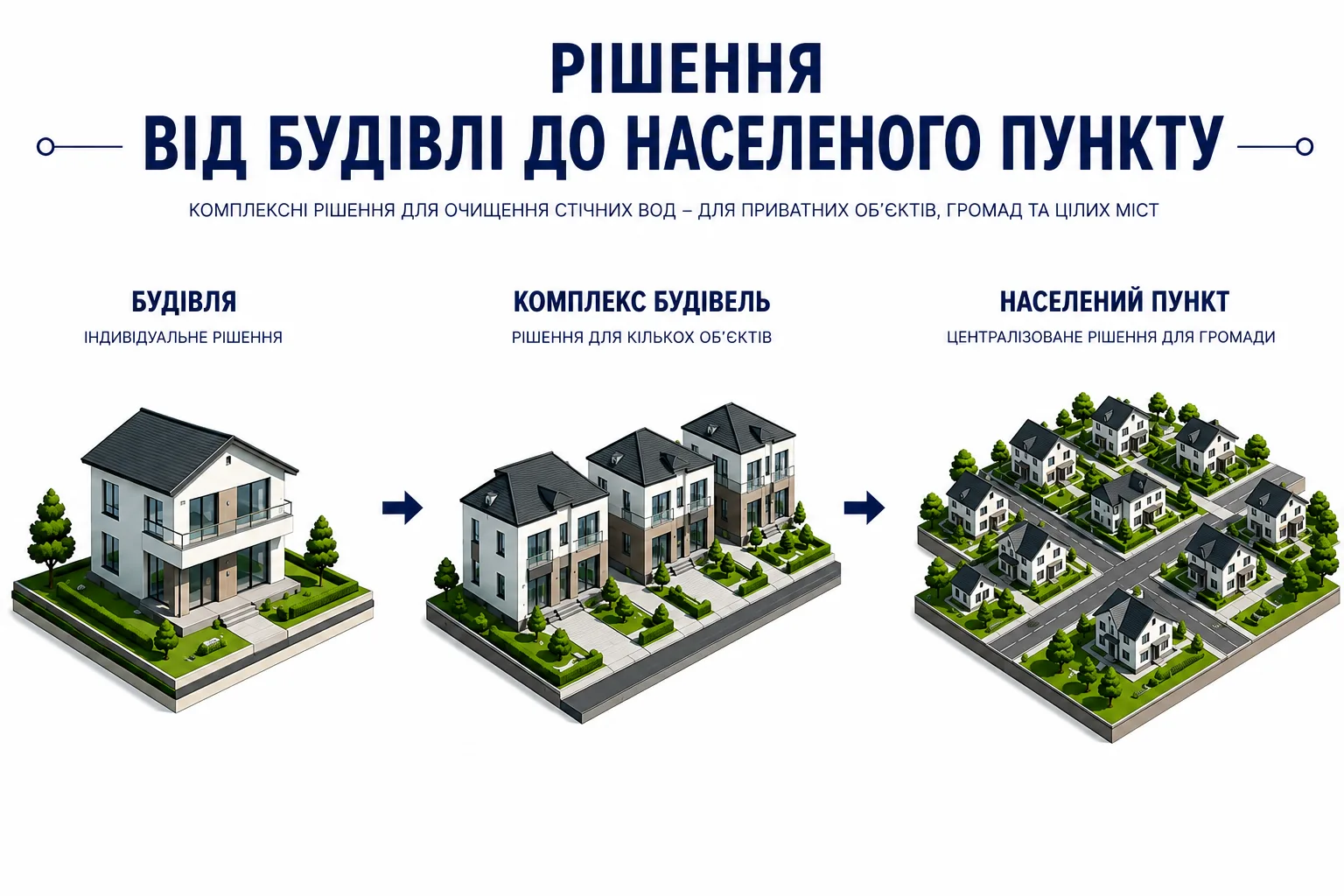
| Site scale | Solution | Capacity |
|---|---|---|
| Single building (school, kindergarten, outpatient clinic) | BioDisc® monoblock | up to 60 m³/day |
| Group of buildings / small village | 1–3 × BioDisc® (in parallel) | up to 180 m³/day |
| Village, settlement | PlanetTEK (modular RBC, in phases) | 150–700 m³/day |
| Settlement, small town | MITA — large Biorulli® biodiscs | up to 2000 m³/day |
The exact system is selected by wastewater volume and construction phases — a ZIKO engineer calculates the solution free of charge. More detail: BioDisc® · PlanetTEK · MITA.
How a community’s wastewater is treated
Mechanical preparation
Screens and settling hold back large solids; the flow is evened out for uneven domestic discharges.
Biological treatment on biodiscs
A biofilm on the rotating discs breaks down organics without air injection — quiet, odour-free, with minimal energy.
Clarification and discharge
The clarified water is separated from the sludge and discharged to the environment per discharge standards.
The configuration and scale are determined by the wastewater volume and discharge standards of the specific community.
Why this solution suits a community
Scale from a building to a settlement
One technology for a school, a group of buildings and a whole village.
Grows in phases
Capacity is added to fit the budget, subventions and grants, without overpaying up front.
No odour or noise
Rotating biodiscs instead of blowers; can be placed next to a school, kindergarten or housing.
5–20 m sanitary zone
Doesn’t “eat up” the plot, fits into the settlement’s built-up area.
Energy efficiency
Biodiscs consume an order of magnitude less than classic aeration plants — important for the budget.
Discharge per standards
The treated water meets the standards for discharge to the environment; no fines from the environmental inspectorate.
A solution for the community’s budget and procedures
Phased to the budget
The plant is commissioned in phases: from the priority site to the scale of the whole settlement — to fit budget and financing capacity.
Documentation for the tender
We prepare a technical and commercial proposal and specifications for procurement by procedure (ProZorro).
Demonstration of an operating site
We’ll show a working plant in another community — with a site visit, so the solution can be assessed live.
From survey to a working plant
Survey and data collection
Type of site(s), number of residents/users, wastewater volume, site conditions, discharge point.
Selection and phase plan
A system for the scale (BioDisc® / PlanetTEK / MITA), a phased implementation plan, a technical and commercial proposal.
Design
For the site and discharge standards; documentation for tender procedures.
Supply and installation
Delivery, installation, commissioning, putting into operation.
Frequently asked questions
One plant for the whole village or per site?
It depends on the task: a single building (school, outpatient clinic) suits a BioDisc® monoblock; for a whole settlement, a modular PlanetTEK or large MITA biodiscs are installed to cover the entire settlement. Often you start with the priority site and build up.
Can it be implemented in phases to fit the budget?
Yes, modularity lets you commission capacity in phases — to fit subventions, grants and budget capacity, without freezing funds up front.
Can the plant be placed next to a school or kindergarten?
Yes — a 5–20-metre sanitary zone, no odour or noise, because there are no blowers. It is safe near children.
Who services a community plant?
Scheduled maintenance once a year is carried out by the ZIKO service team under contract; daily supervision is not needed. The service customer is usually the community or a municipal utility.
What about operation in winter and under variable load?
The biology on the discs is stable under load fluctuations and in the off-season — it does not die off under partial load.
Do you prepare documentation for the tender?
Yes — a technical and commercial proposal and specifications for procurement by procedure (ProZorro).
To what standards is the water treated?
To the actual discharge requirements to the environment for the specific site; the configuration is selected to meet these standards.
We’ll size treatment plants for your community
Tell us what the site is — a single building or a whole settlement — and the approximate number of residents or wastewater volume. A ZIKO engineer will select a system (BioDisc® / PlanetTEK / MITA), a phased implementation plan and the cost. On request, we’ll show a working plant in another community.
Or call: +38 095 93 21 273