
Water treatment for HOAs and residential complexes

Industrial water treatment
Water treatment for HOAs and residential complexes
Clean water for the whole building — one system instead of a filter in every apartment. We design and build such systems for apartment buildings, residential complexes and cottage communities.
- Hardness, iron, pressure
- Disinfection after the storage tank
- In-house laboratorywater analysis and testing
- 1,760+ completed projectsZIKO experience since 1993
- Up to 5-year warrantyon solutions and equipment, under the contract terms
- Service across Ukrainetechnical support and field service crews
Problems
Problems residents and property managers face
Water quality in an apartment building depends not only on the source but also on the condition of the pipes and tanks and how they are operated.
What poor-quality water damages

Household appliances
Hard water leaves scale on the heating elements of water heaters and washing machines: heat transfer drops and appliances wear out sooner.

Plumbing and pipelines
Iron, manganese and suspended solids leave sediment, stain plumbing fixtures, clog fittings and build up in the building’s pipes.

Pressure and water supply
Weak or unstable pressure on the upper floors can result from hydraulic design errors, pump operation or pipe resistance. That is why we design water treatment and the pump group together.

Water after storage tanks
A dirty tank, stagnant water or improper operation raise the risk of secondary microbiological contamination.
We calculate equipment, operating and service costs and build in reliability. Co-owners get a well-grounded proposal they can take to a general meeting.
Water quality requirements
Water quality depends not only on the source but also on the pipes
Water from the city network must comply with DSanPiN 2.2.4-171-10. But its parameters change on the way through the pipes, tanks and building networks. That is why we take the sample at the building inlet, not from the water utility’s report.
The water’s path to the consumer
- Water utilityquality control at the station
- City networkskilometers of pipes: iron, secondary contamination
- Building inletsampling point
- Building pipes and tankwater stands still — without disinfection, microbiology deteriorates
- Resident’s tapwhat the resident sees and drinks
Which parameters need monitoring
What exactly to test depends on the source, lab data and the site’s specifics. We assess four groups of parameters.
- Physicochemical: hardness, iron, manganese, ammonium, pH, mineralization.
- Organoleptic: turbidity, color, odor and taste.
- Microbiological: regulated by DSanPiN 2.2.4-171-10.
- Secondary contamination: changes in water quality in internal pipes and tanks.
Parameter, standard, regulated by
| Parameter | Standard | Regulated by |
|---|---|---|
| Manganese | undesirable above 0.05 mg/L | DSanPiN 2.2.4-171-10 |
| Ammonium | ≤ 0.5 mg/L | DSanPiN 2.2.4-171-10 |
| pH | 6.5–8.5 | DSanPiN 2.2.4-171-10 |
The target hardness for the building is set by appliance requirements and the general meeting’s decision.
Solution
A water treatment system designed for your building
Every residential complex has its own water supply conditions. That is why we define the equipment not from a standard layout but from the water analysis, hydraulic calculation and the building’s technical conditions.
Building-wide system or filters in apartments
Filters in apartments
- Treat water only at individual points of use.
- Each filter is maintained separately.
- Do not solve water problems in the building’s pipes.
- The result depends on how the filter was selected and maintained.
One system at the building inlet
- Treats water for all designated consumers in the building.
- We monitor water quality at the system outlet.
- One control system and one contract for service.
- Protects the building’s utility equipment from certain types of contamination.
Core treatment train
- Combined treatment (MIX)
- Mechanical water filtration
- Water softening
- Ultrafiltration (UF)
- Iron and manganese removal
- Reverse osmosis (RO)
Added for this industry
- Odor removal and sorption treatment
- Water disinfection
- Nanofiltration (NF)
There is no operator in the building, and the system runs around the clock. That is why we build in automatic backwash, an alternator and clear alarm signaling.
On-site wastewater treatment plants are a separate ZIKO line of work: wastewater treatment plants for cottage communities.
Completed projects
Systems already running in residential complexes
From treating mains water to complete water supply from wells — with storage tanks and pumping stations.

Containerized modular station — 35 m³/h
Reverse osmosis, iron removal and disinfection in one station. The equipment is installed in modular containers.
-
Turnkey water supply
- Borehole pumps, water treatment, storage tanks and pumping equipment
- All equipment is housed in the utility rooms of a two-level parking garage
-
Treating water from the city mains
- We reduce iron content
- We adjust hardness to the level set by the client
Similar schemes run in other buildings too: an office complex in Lviv, a hotel in Lviv, a water utility in the Lviv region.
We will calculate the capacity for your buildingTell us the number of apartments — we will convert it to m³/h and m³/day for peak loads and the water supply mode.
Get a calculationCost
How much water treatment costs for an apartment building
We calculate the system cost individually: it depends on the raw water quality, capacity, the site’s technical conditions and treated water requirements.
Equipment, automation, installation, commissioning and auxiliary infrastructure.
Electricity, water for process needs, chemicals, consumables, maintenance. For a residential building they weigh more than capital costs: they stay in the monthly fee for good.
If needed, we prepare several options to compare the implementation budget and operating cost. We break the preliminary estimate down per apartment: that is the form in which the question goes to the general meeting.
Implementation stages and service
From the technical specification to stable system operation
We run the project from the site survey and lab tests to installation, start-up and service.
Stage 01 of 04
We survey the building and the water
We take the sample at the building inlet, not from the water utility’s report.
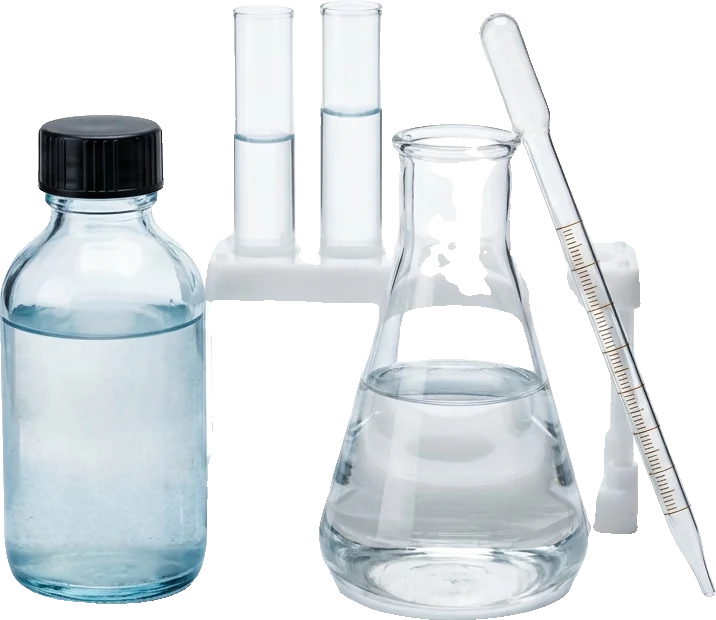
- Survey and water analysis
- Technical specification
ZIKO has its own laboratory. We analyze the water and verify difficult cases with tests on filter media. Based on the results, we set the system requirements and design a solution for your building.
Stage 02 of 04
A solution you can take to the owners’ meeting
For an HOA, there is a step that production plants do not have — the general meeting’s decision. We come to it with a feasibility study and a per-apartment calculation.
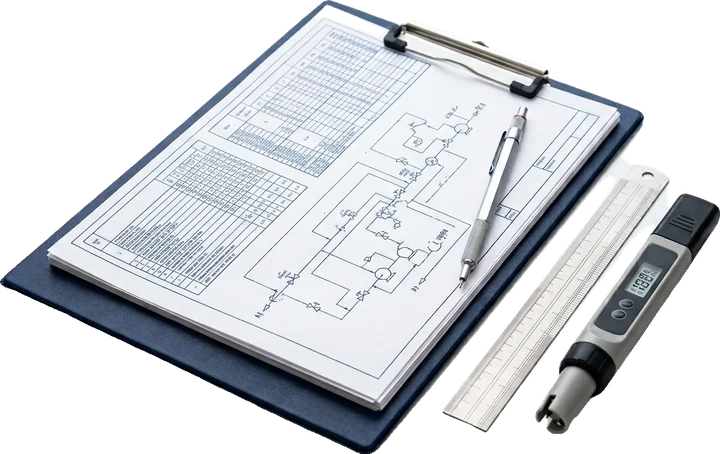
- Engineering solution and feasibility study
- General meeting decisionthe HOA’s step, with a per-apartment calculation
Stage 03 of 04
We design and install
We define the equipment based on the water analysis, hydraulic calculation and the building’s technical conditions.
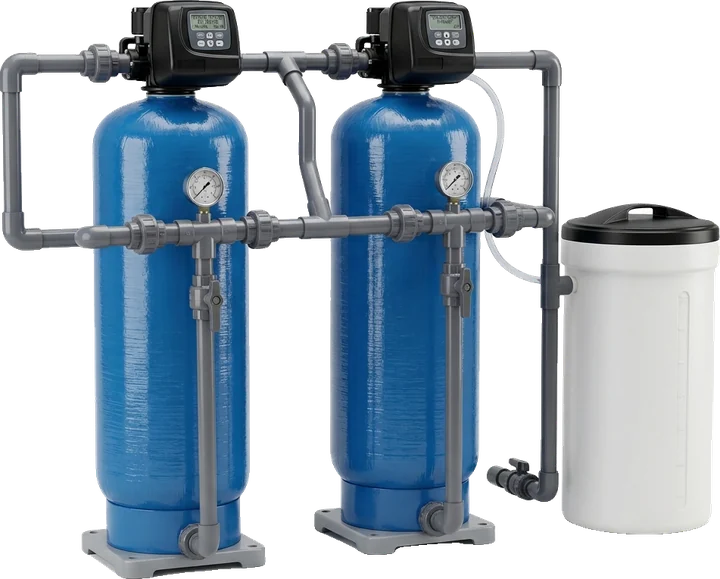
- Design
- Supply and installation
Stage 04 of 04
We commission and support
We support completed systems throughout their operation.
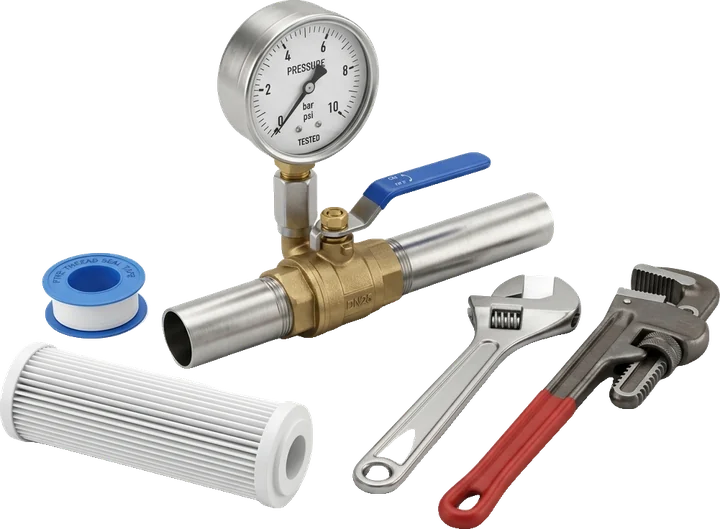
- Commissioning
- Service support
Service life and schedule
We build the maintenance schedule around water quality, operating mode and equipment. Guideline intervals:
- Ion exchange resin
- 3–7 years
- Pretreatment cartridges
- at least every 3 months
- Salt and chemicals
- based on actual consumption
Warranty and post-warranty maintenance
We set service terms and frequency in the contract. An HOA usually has no staff engineer. So we either maintain the system under contract or design it so that all a person needs to do is top up the salt.
- Scheduled maintenance
- Diagnostics
- Treatment quality monitoring
- Replacement of consumables
- Equipment adjustment
Questions and answers
Most frequently asked questions about water treatment for HOAs and residential complexes
Didn’t find yours? Ask an engineer in the form below.
How does a building-wide system differ from apartment filters?
A building-wide system treats water centrally for designated consumers in the building and provides single technical control. Apartment filters treat water locally. The choice depends on water quality, residents’ needs and technical and economic feasibility.
Is water treatment needed if water comes from the city mains?
Compliance is confirmed at the water utility’s station outlet. On the way through city and building networks, the water picks up iron and secondary contamination. That is why we take the sample at the building inlet — it often differs from the supplier’s report.
How is system capacity calculated?
We calculate capacity in m³/h and m³/day from design water consumption, the number of apartments, occupancy, peak loads and the water supply mode.
Can a system be installed in an occupied building?
Yes. First we assess the utility rooms, existing services, network hydraulics and how to connect the equipment without significant interruptions to water supply.
How much does the system cost, and how much is that per apartment?
The cost depends on water quality, capacity, equipment configuration and installation conditions. We estimate capital and operating costs and break them down per apartment so the question can go to the general meeting.
Who will maintain the system, and who pays for salt and service?
ZIKO provides warranty and post-warranty maintenance under a service contract: diagnostics, scheduled work, replacement of consumables. The HOA includes the cost of salt and service in its fees. That is why the design shows the monthly upkeep cost from the start.
What happens if pressure drops in the city network?
For this, we include a clean water tank and a pumping station in the design. The treated water reserve keeps supply going while the city mains have no pressure.
Need water treatment for your building?
Start with a consultation with a ZIKO engineer. Tell us the number of apartments and attach a water analysis if you have one. We will tell you whether further tests are needed, help with the technical specification and give a preliminary cost estimate.
Consultation and preliminary estimate are free.
Phone: +38 095 93 21 273
Where to go next
Related industries
- Hotels, spas, restaurants, shopping malls
- Educational institutions
- Water utilities and municipalities