
Water Treatment for Poultry and Livestock

Industrial water treatment
Water treatment for poultry and livestock farming
Water is the cheapest feed and the most expensive mistake. It has to meet more than the regulations — it has to suit your farm’s process. That is what ZIKO designs the solution around.
- In-house laboratorywater analysis and testing
- 1,760+ completed projectsZIKO experience since 1993
- Up to 5-year warrantyon solutions and equipment, under the contract terms
- Service across Ukrainetechnical support and field service crews
Problems
Poor water: risks to livestock, equipment and production
On a farm, water goes to the animals, to sanitation and into production processes. If it does not meet requirements, productivity drops, equipment wears out faster and production runs with disruptions.
Who needs water treatment in livestock farming

Poultry plants and broiler farms
Water for drinking, vaccination and sanitation. Its quality affects both intake and how medications work.

Pig farms
Water quality affects nipple and bowl drinkers, hygiene in the barns and pen washing between batches.

Dairy farms
Water for the herd, for washing milking equipment and milk cooling tanks.

Feed mills
Water for production processes, steam generators and auxiliary equipment at a feed mill.
Hidden losses for the farm
Clogged drinkers and pipelines
Oxidized iron and deposits clog nipples and pipes. Birds get less water, feed intake drops and flock uniformity suffers. People notice it in the batch results, not in the line pressure.
Biofilm and microbiological contamination
Long lines with slow flow and organics in the water breed biofilm. It becomes a reservoir of pathogens and undermines vaccination through drinking water. Iron, manganese and chlorine change how medications work, and sediment in the line holds back part of the dose.
Deposits and equipment corrosion
Hard or aggressive water causes scale and corrosion. Equipment performs worse and its operating costs go up.
Risk of lower productivity
An animal that drinks less eats less. This is the quietest source of losses: no breakdown, just poorer feed conversion that gets blamed on genetics or feed.
Water requirements
Different processes — different water requirements
Quality requirements depend on how the water is used, your production and your equipment. That is why we design the system around actual consumption.
Drinking water for poultry and livestock
Water with no sediment or biofilm keeps nipple lines running smoothly, and the animals drink as much as they need.
Veterinary treatments
Water for vaccines and veterinary drugs must meet the manufacturers’ instructions. Usually that means water with no chlorine or sediment.
Washing and sanitation
Washing houses and equipment between cycles, while the house is empty. Your farm sets the requirements for this water.
Process needs
Steam generators and heat exchangers at the feed mill. Their water is treated as for a boiler house: osmosis and pH correction.
There is no one-size-fits-all solution for every farm. We take into account the raw water, your production and the needs of your business.
- We analyze the water in our own lab and, when needed, test filter media.
- We help draft the specification.
- We select and commission the system, then service it.
For drinking water, DSanPiN 2.2.4-171-10 sets, among other things, nitrates ≤ 50 mg/L and pH 6.5–8.5. Veterinary requirements apply on top of that for livestock drinking water. On a farm with a well, the typical issues are iron, manganese and sometimes hydrogen sulfide.
Solution
What the system consists of
The system is defined by the water analysis, not by the industry. The set below is a typical starting point for the selection.
How it was done at a poultry complex in the Volyn region · water at ≈ 1 °C, no heating
- Wellcold water, ≈ 1 °C
- 01Mechanical filtration130 µm disc filters: sand, rust
- 02Multi-purpose unithardness, organics, iron, manganese, ammonium
- 03UV disinfectionmicrobiology control with no chemicals in the water
- To the drinker lineson each of the six farms
Core treatment train
- Combined treatment (MIX)
- Mechanical water filtration
- Water softening
- Ultrafiltration (UF)
- Iron and manganese removal
- Reverse osmosis (RO)
Added for this industry
- Odor removal and sorption treatment
- Water disinfection
- Chemical dosing
Several sites, each with its own well. It is often cheaper to install identical units at each one than to run a main from a single station. That is exactly how it was done at a site with six farms.
A farm counts water not in m³/h but in head of stock. Demand depends on the species, the animal’s age and the house temperature, and it peaks on the hottest days. The system is sized for peak demand — otherwise it fails exactly in the heat.
Completed projects
Projects already in operation
ZIKO builds industrial water treatment across Ukraine, including for the agricultural sector.

Cold drinking water for six farms
ZIKO designed the no-heating scheme based on its own research into cold-water filtration. The treatment stages are shown in the diagram in the “Solution” section.
Project details →-

Iron removal for a poultry slaughterhouse
- 80 m³/h (1,920 m³/day)
- Iron removal with water-only regeneration, Fe ≤ 0.2 mg/L
- Consistent water quality for equipment washing and carcass chilling
-
Drinking water for young bulls
- Iron removal, manganese removal, turbidity removal
- Softening: we bring very hard raw water up to DSTU requirements
-
Drinking water for a snail farm
- Mediterranean snails: strict drinking water requirements
- Reverse osmosis, from 55 L/h
Not sure where to start?Send us a water analysis or just tell us about your farm — a ZIKO engineer will tell you which stages you need.
Get an estimateCost
System cost is more than the equipment price
We calculate the price for your site. It depends on the raw water, capacity, treatment requirements, level of automation and project conditions.
We calculate two components
- Capital costs — equipment, design, installation and commissioning.
- Operating costs — electricity, water for the system’s own needs, chemicals, consumables and service.
We look for a solution with a sensible balance of upfront investment, operating costs and reliability. For a farm, we compare these costs with the losses: what one percent of feed conversion costs over a year.
Stages and service
From survey to service: a turnkey project
Stage 01 of 04
We survey the farm and the water
Without accurate data on the raw water composition, there is no sound basis for a solution.
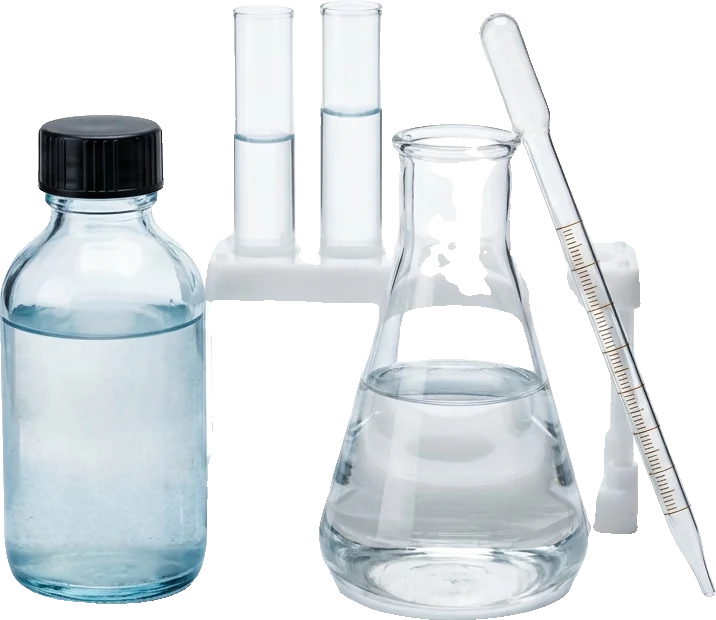
- Site surveyWe study the farm’s needs and the existing water supply.
- Laboratory testingWe analyze the raw water and, when needed, test the treatment technology.
Stage 02 of 04
We help draft the specification
Every project starts with a specification: the source, water requirements, capacity in m³/h and m³/day.
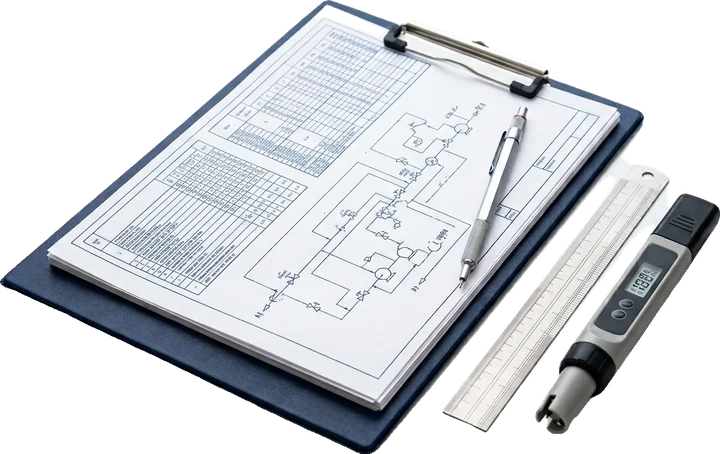
- Technical specificationWe help define the quality parameters and capacity.
Stage 03 of 04
We design the solution
We are not tied to any equipment manufacturer and select what delivers the agreed water quality.
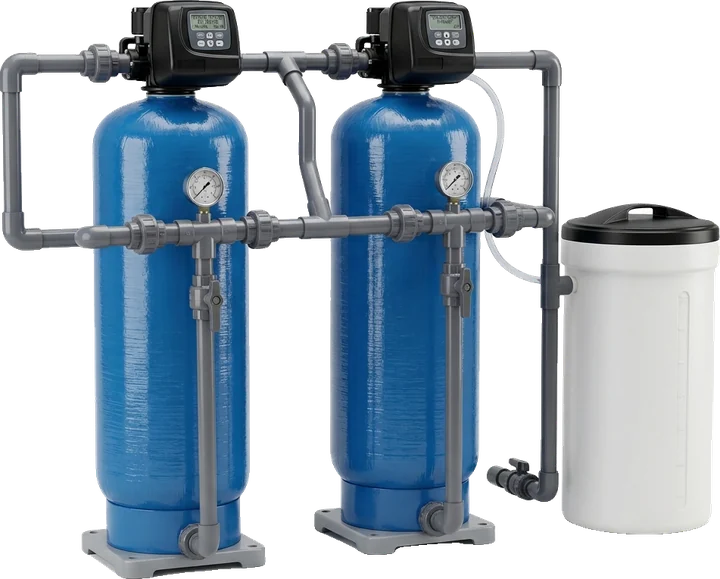
- Engineering solutionWe prepare a feasibility study, select the equipment and agree on the terms.
Stage 04 of 04
We install, commission and service
On a farm, installation follows the production cycle: between batches, while the house is empty and being sanitized.
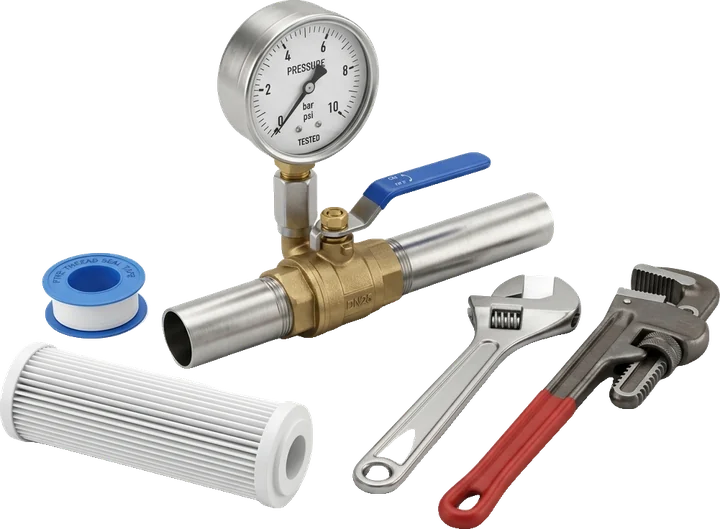
- Supply and installationWe deliver the equipment and carry out installation and electrical work within the agreed scope.
- CommissioningWe check system operation and the agreed parameters.
- Warranty and serviceWe support and maintain the system throughout its service life.
Service life and maintenance schedule
- Pre-filter cartridges
- at least every 3 months
- Flushing drinker lines between cycles
- a farm task,not a service job
After start-up, we sign a service contract: ZIKO service engineers regularly inspect the equipment and monitor its operation. When there are several sites, maintenance is planned as one trip covering all of them. Identical units also mean one set of spare parts instead of six different ones.
FAQ
Frequently asked questions
Why do the nipples clog even with a filter?
Most likely the filter is mechanical and the iron in the water is dissolved: it passes through the filter unseen and oxidizes in the drinker line. Mechanical filtration does not help here — you need iron removal with oxidation.
Can vaccines be given through chlorinated water?
Chlorine and residual oxidants change how the drugs work, so water is usually prepared separately before vaccination. This is one reason farms more often install UV: it disinfects without leaving anything in the water.
Can one system serve drinking, washing and process needs?
Yes, if the treated water meets the requirements of all users. Whether to use a shared system or separate circuits, we decide based on the water analysis and the technical specification.
Is a water analysis required before selecting equipment?
Yes. Without accurate data on the raw water composition, there is no sound basis for a solution. When needed, we also test the treatment in the lab.
How does ZIKO commit to the quality and quantity of treated water?
We agree the treated water parameters and capacity (m³/h, m³/day) in the technical specification, based on the raw water composition and operating conditions. Warranty terms are set out in the contract.
Can an existing water treatment system be upgraded?
Yes, if the equipment condition allows it. After a technical survey, we will tell you what can be kept and what should be replaced.
How much does a water treatment system for an agricultural business cost?
We calculate it individually, based on the water analysis, capacity and site conditions. We account for both capital and future operating costs.
Discuss your task with a ZIKO engineer
Tell us your herd or flock size and water source, and attach an analysis if you have one. We will design a solution for your water, the capacity you need and your farm.
Consultation and preliminary estimate are free.
Phone: +38 095 93 21 273
Where to go next
Related industries
- Crop farming, greenhouses, irrigation
- Food processing