
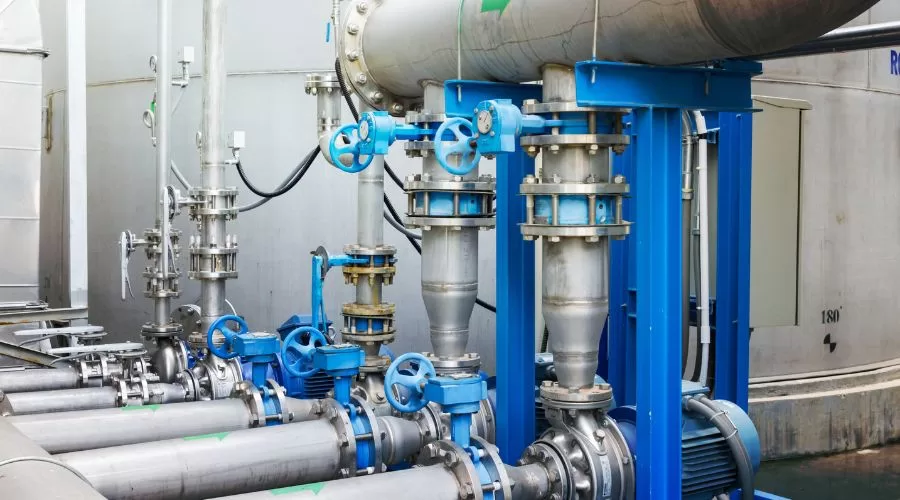
During municipal water treatment, water that is subsequently supplied through centralized drinking water supply systems is purified in accordance with quality standards and sanitary–hygienic regulations. High-quality industrial water treatment must be comprehensive and include several complementary processes to ensure stable and safe water quality.
Water Treatment Methods
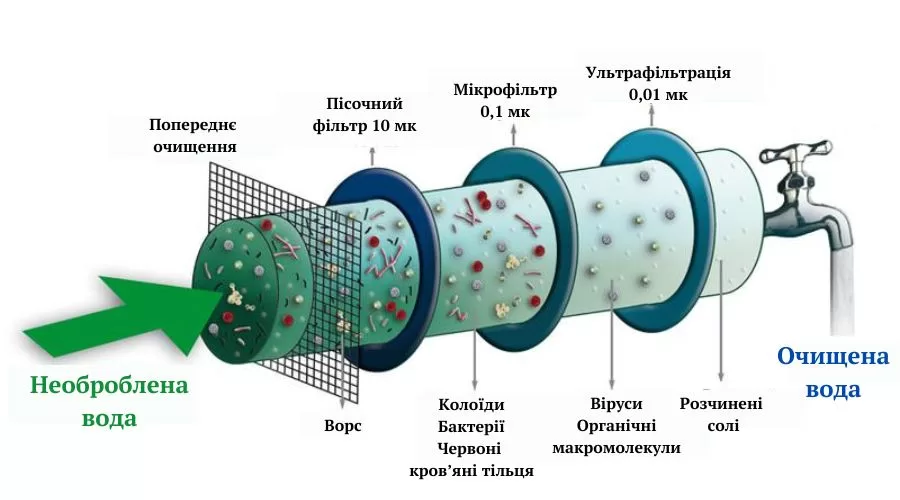
Water treatment is divided into 5 main methods:
- Mechanical.
- Water disinfection.
- Softening.
- Iron and manganese removal.
- Removal of hydrogen sulfide, ammonia / ammonium.
Mechanical water treatment at water utilities
Mechanical water treatment in centralized water supply systems is the initial stage of water preparation. Mechanical treatment involves the use of industrial water filters that remove various impurities from water:
- pipeline fragments;
- rust;
- clay;
- sand and other suspensions.
Modern industrial filters for mechanical water treatment are available in different sizes and with different filter media. The size and type of the filter media must be selected in accordance with the results of a preliminary analysis of the incoming water.
Water softening
During the softening process, magnesium and calcium cations are removed from hard water. As a result of water softening, scale does not form, which affects the efficiency of household appliances (boilers, kettles, washing machines) and plumbing equipment.
The risk of clogging channels in devices and systems through which water passes is reduced. This significantly lowers energy consumption and increases the efficiency and service life of the equipment.
Iron and manganese removal
Iron and manganese contained in water have a negative impact on human health: they impair kidney and liver function and cause allergic reactions. Therefore, when supplying water from private wells or through old water pipelines, it must be deironed and purified from manganese using industrial water filters.
This not only improves water quality. Removal of iron from water prevents scale and sediment formation. This improves the operation of plumbing fixtures, dishwashers, and washing machines and significantly reduces corrosion of metal surfaces of equipment and pipelines.
Removal of hydrogen sulfide, ammonia, ammonium
High concentrations of hydrogen sulfide, ammonia, and ammonium indicate bacterial contamination of water. These elements also worsen its taste and odor.
Water treatment to remove ammonium, ammonia, and hydrogen sulfide using industrial water filters makes it safe for human health and suitable for drinking. Water saturated with these elements significantly reduces the efficiency and service life of heating networks and heat exchangers.
Water disinfection
Disinfection is the final stage of water treatment. During this stage, the vital activity of pathogenic organisms in water is suppressed.
Water disinfection methods
- Chemical (reagent-based) — water is disinfected using biologically active chemical compounds.
- Physical (reagent-free) — water treatment using ultraviolet lamps.
- Combined — includes both reagent-based and reagent-free water disinfection methods.
Reverse osmosis water treatment
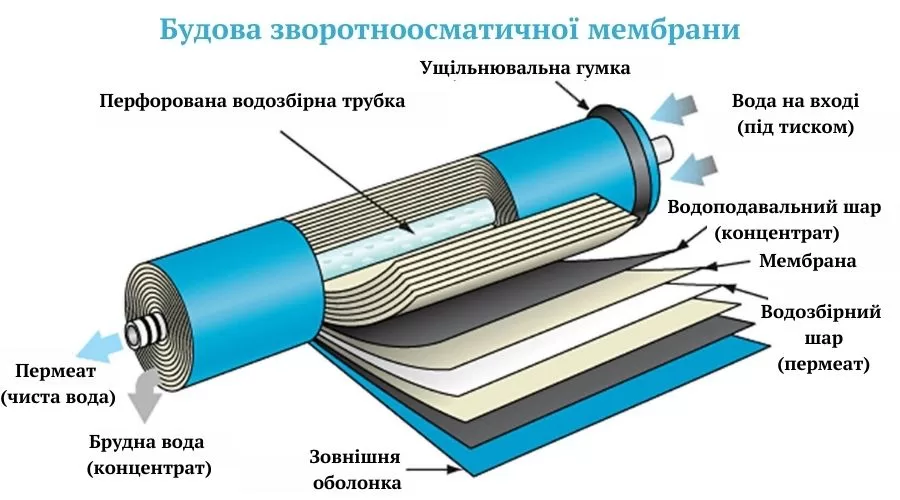
Maximum water purification efficiency is provided by industrial reverse osmosis systems. Such systems are equipped with special osmotic membranes that purify water from virtually all impurities.
Modern industrial reverse osmosis systems make it possible to obtain high-quality water that is safe for human health with a maximum degree of purification. In terms of its characteristics, water treated by this equipment is similar to glacial meltwater and is considered one of the highest-quality and most environmentally clean types of water.
The ZIKO company also provides installation of modular water treatment systems.
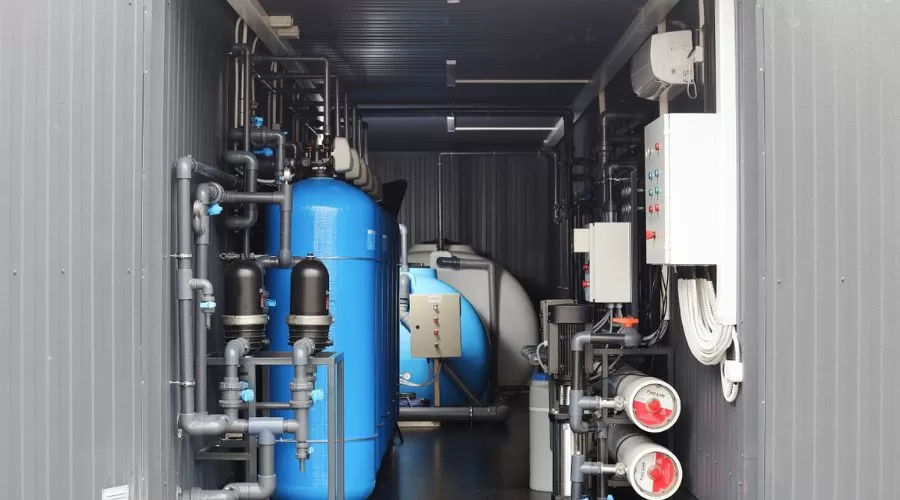
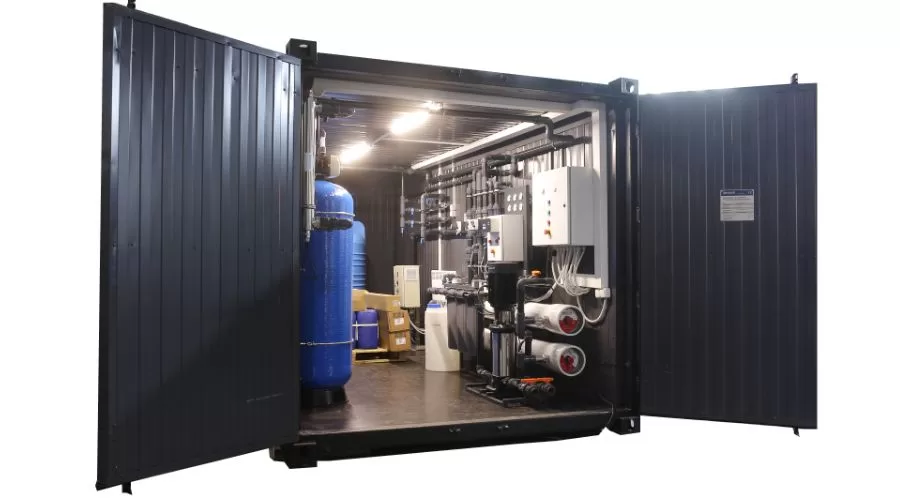
Modular water treatment stations are classified as temporary structures. They can be installed without a foundation and, if necessary, can be easily dismantled and relocated to another site. The container undergoes full preparation prior to equipment installation. The modules are equipped with internal cladding, including thermal insulation, electrical wiring, lighting elements, as well as heating and ventilation systems.
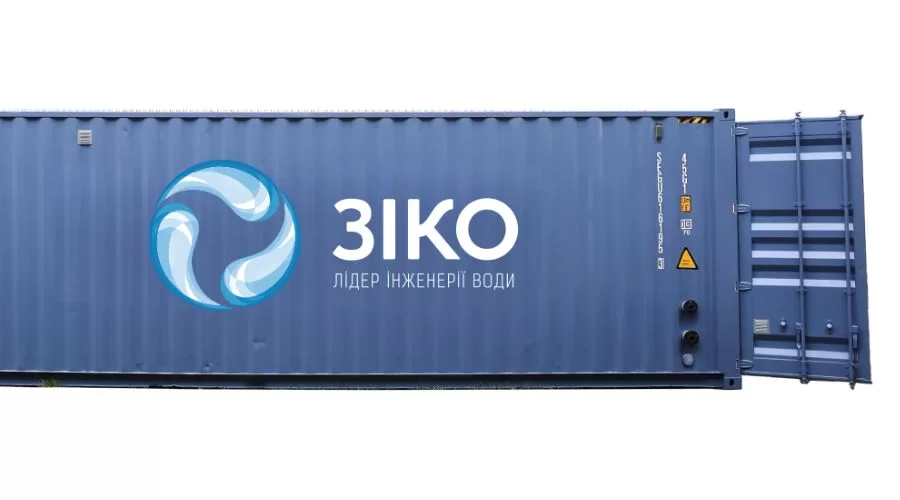
The main advantage of modular water treatment stations is their mobility and speed of deployment, which allows installation of the facility at any time of the year. This significantly reduces construction costs and shortens commissioning time.
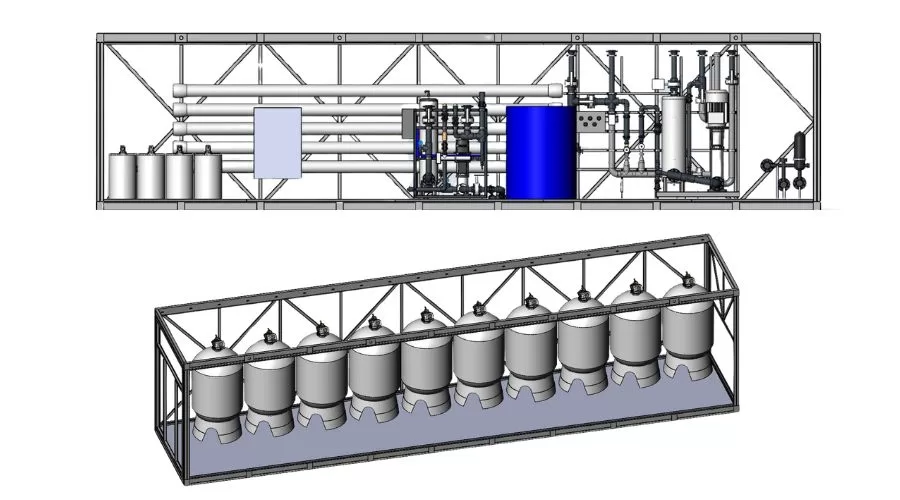
Optimal equipment layout makes it possible to use the available space inside the container as efficiently as possible, while providing access to every element of the water treatment system.
An important design advantage of these installations is that they can be easily upgraded with additional equipment to increase productivity.
Containers with sizes of 20 and 40 feet are used for installation.
Depending on the developed technological solution, the water treatment station may include:
- filtration units
- clarification units
- iron removal systems
- aeration units
- ion-exchange units
- adsorption units
- membrane systems
- pumping units
- water disinfection units
- storage tanks and other equipment
Implemented Projects
For more than 30 years of operation, ZIKO Company has implemented numerous projects for Lviv Vodokanal, Vodokanal of Volodymyr-Volynskyi, Vodokanal of Liublynets, Vodokanal of Shatsk, and others.
Equipment and Turnkey Solutions for Water Treatment at Water Utilities
We supply a wide range of equipment for water preparation and treatment. ZIKO Company also offers effective turnkey solutions, reverse osmosis systems, and industrial water filters of various types. All equipment complies with sanitary and hygienic requirements and European quality and safety standards.
ZIKO Company implements projects in all major cities and regions of Ukraine. This allows us to:
- promptly process requests and supply equipment within the agreed timeframes;
- design water treatment systems in accordance with customer requirements and operating conditions;
- install, commission, and fine-tune water treatment systems at customer facilities.
You can contact the company’s managers via the email address in the “Contacts” section or through the feedback form at the bottom of the page. Our specialists are also ready to answer all questions by phone.