
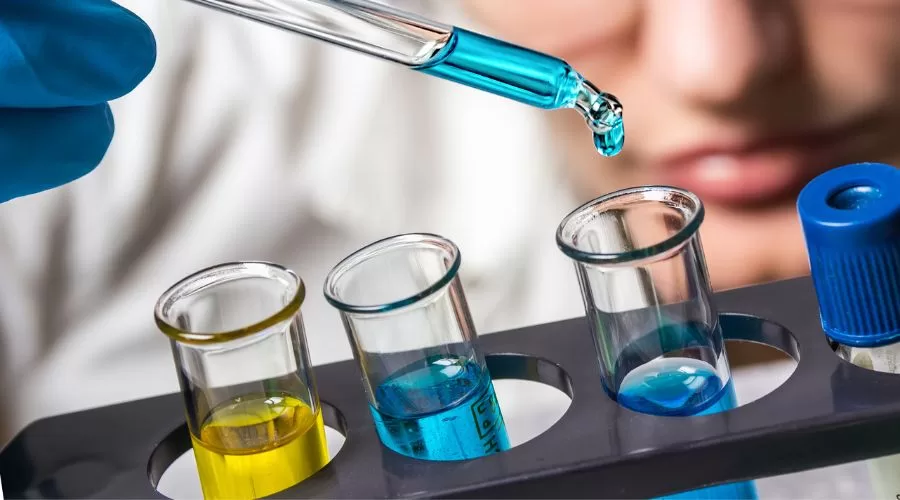
High-quality water treatment for chemical production makes it possible to condition water to the required specifications. The water is softened, various impurities and inclusions are removed, and the concentration of metals, minerals, and other elements is reduced. After purification at the production stage, water is used as a component or raw material for the manufacture of chemical substances, including a wide range of acids, hydrogen, and acetylene.
At chemical enterprises, water is used:
- in heating and cooling systems;
- in membrane units and steam boilers;
- for flushing systems or transporting solid particles;
- for dissolving various substances to the required consistency;
- for absorption, flotation, or extraction processes.
Industrial Water Treatment Methods for the Chemical Industry
Following industrial water treatment, the quality and performance characteristics of water are significantly improved. This has a positive effect on equipment service life and enhances the efficiency of technological processes. The following industrial water treatment methods are used in the chemical industry:
- water softening;
- ultraviolet disinfection;
- adsorption using activated carbon media;
- reverse osmosis.
Ultraviolet Water Treatment
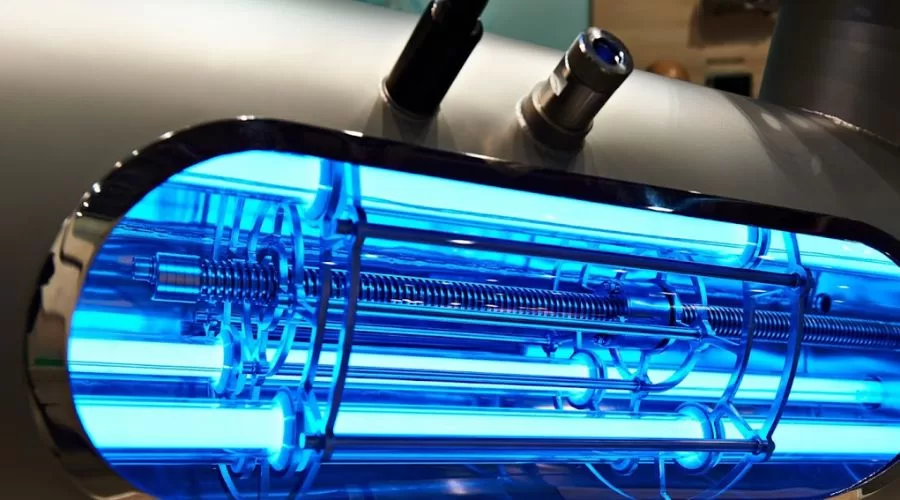
Relatively cost-effective industrial ultraviolet (UV) water treatment makes it possible to eliminate viruses and microorganisms present in water. Unlike chemical treatment methods, ultraviolet water purification does not harm the ecosystem and is completely safe for human health.
Adsorption Using Activated Carbon Media
During the adsorption process, industrial filters remove harmful impurities and chemical compounds from water. This method enables purification to near-zero residual concentrations of various contaminants. Adsorptive treatment using industrial water filters removes hydrogen sulfide, hydrocarbons, and chlorine, and also eliminates undesirable taste and odor.
Water Softening at Chemical Enterprises
The removal of calcium and magnesium salts (water softening) is carried out using industrial water treatment filters. There are three primary softening methods:
- nanofiltration;
- reagent-based treatment;
- ion-exchange.
Water softening using industrial water treatment systems allows for the effective removal of hardness salts from the treated medium. This prevents scale formation on heating surfaces and reduces the risk of deposits forming on the internal walls of pipelines and equipment.
Industrial Reverse Osmosis Systems
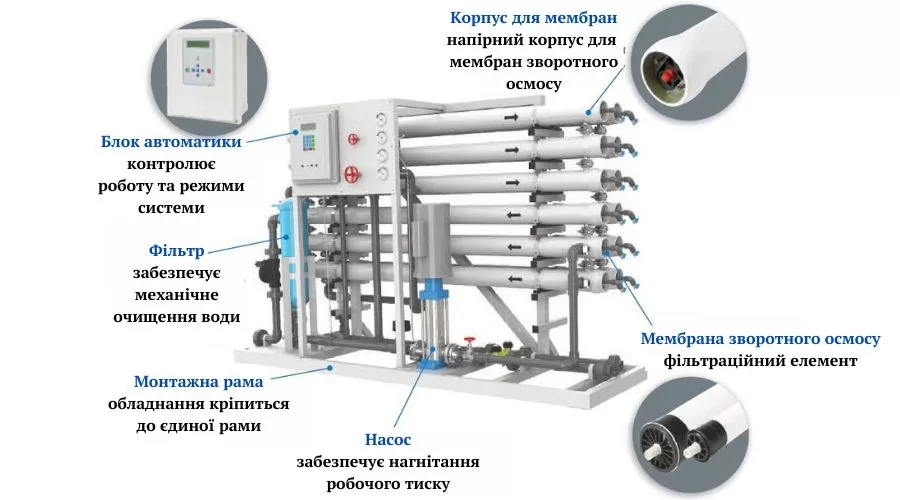
In industrial reverse osmosis systems, semi-permeable selective membranes are used as filtering elements. These membranes allow only specific substances to pass through. More precisely, only water molecules and certain organic molecules with properties very close to those of water can permeate the membrane structure.
Two types of membranes are used in industrial reverse osmosis systems:
- osmotic membranes;
- nanofiltration membranes.
These multilayer membranes are manufactured from materials with different technical characteristics and performance properties.
Industrial Water Treatment Systems from ZIKO
ZIKO offers a wide range of industrial water filters, reverse osmosis systems, and turnkey solutions for water preparation and water treatment at competitive prices. The company supplies equipment to industrial enterprises in the city of Lviv as well as to other regions of Ukraine.
The presence of company representatives in all regions of the country allows ZIKO to:
- deliver turnkey water treatment solutions in the shortest possible time;
- conduct audits of existing water treatment equipment at industrial facilities;
- design, install, commission, and start up water preparation and water treatment systems;
- provide warranty and post-warranty equipment maintenance.
To order equipment or discuss cooperation terms, potential clients may contact us via the email address listed in the Contacts section. Our managers are also available by phone to provide consultations regarding availability, pricing, technical specifications, and the intended application of the equipment.