Industrial Wastewater Treatment Systems for Enterprises
Protection of natural resources (such as rivers, lakes, and other water bodies) is a critical component of engineering solutions for industrial wastewater treatment.
Water used in industrial processes — ranging from steel production to agriculture and power generation — inevitably changes its properties during operation. Chemical elements are added, and by-products accumulate as water passes through technological systems. As a result, industrial wastewater often requires treatment to remove suspended solids, phenols, synthetic surfactants, heavy metals, and persistent organic compounds before it can be reused or discharged into natural water bodies.
Effective wastewater treatment significantly reduces the volume of discharged waste, thereby minimizing environmental pollution. However, companies operating under strong competitive pressure to keep costs as low as possible often do not allocate sufficient resources for implementing new technologies or upgrading existing wastewater treatment systems.
At the same time, rational use of wastewater treatment systems fully justifies these investments. Treatment of industrial wastewater enables reuse of treated water after it has passed through filtration and purification stages. When such systems are applied, water savings can reach up to 80%, while the remaining 20% is lost together with contaminants and impurities.
An additional economic incentive is the reduction of penalties and disposal fees paid to municipal water utilities or private treatment facilities, which may amount to hundreds of thousands of hryvnias per year.
Thus, industrial wastewater treatment ensures both cost savings and environmental sustainability.
Requirements for Maximum Permissible Discharge Concentrations of Industrial Wastewater
When industrial wastewater is discharged directly into a water body, compliance with the “Rules for the Protection of Surface Waters from Pollution by Return Waters No. 465-99” is mandatory. This regulation defines the maximum permissible concentrations (MPC) of substances, exceeding which causes irreversible damage to aquatic flora and fauna, and also leads to regulatory inspections and financial penalties.
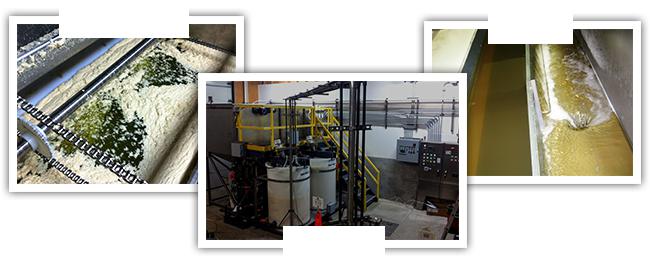
Different types of contaminants require different removal methods.
Mechanical treatment
Water enters the treatment unit via pumps and passes through metal screens or grids to prevent large objects from entering the system. Items such as wood fragments, plastic, and grease are removed. The collected material is washed, compacted, and disposed of at a landfill.
The screened wastewater is then pumped to the next stage — sand removal. Preventing large impurities from entering subsequent treatment stages is critically important.
Depending on the flow rate, wastewater composition, and customer requirements, mechanical treatment may include:
- mechanized bar screens;
- grinder screens;
- waste shredders;
- compactor presses;
- drum or disc screens;
- grit chambers.
Biological treatment
After primary treatment, wastewater still contains a significant amount of dissolved and colloidal matter that must be removed before discharge. The key task is to convert dissolved substances or particles that are too small to settle into larger particles that can be removed by filtration or sedimentation. This is achieved through secondary (biological) treatment.
Settled wastewater enters a bioreactor, where under aerobic or anaerobic conditions organic matter is degraded by microorganisms such as:
- bacteria (aerobic or anaerobic);
- algae (aerobic);
- fungi (aerobic).
The bioreactor creates optimal conditions for microorganism growth and for using dissolved organic matter as an energy source.
Microorganisms break down organic matter through two main biological processes:
- biological oxidation, producing end products such as minerals that remain dissolved and are discharged with treated water;
- biosynthesis, converting colloidal and dissolved organic matter into new cells that form dense biomass, which can then be removed by sedimentation.
Chemical treatment
In early wastewater treatment technologies, chemical treatment preceded biological treatment. In modern systems, biological treatment usually comes first, while chemical treatment is applied as tertiary treatment. In a broader sense, chemical treatment is defined as wastewater purification involving chemical processes.
The main chemical treatment processes include:
- chemical precipitation;
- neutralization;
- adsorption;
- disinfection (chlorine, ozone, ultraviolet radiation);
- ion exchange for hardness removal.
Physicochemical treatment
Physicochemical treatment removes fine-dispersed and dissolved inorganic substances from wastewater and breaks down poorly oxidizable organic compounds.
Common physicochemical treatment methods include:
Coagulation — addition of active coagulants (salts of ammonium, copper, iron, etc.), causing harmful substances to precipitate and be easily removed.
Adsorption — based on the ability of certain materials to absorb impurities. Common adsorbents include activated carbon, bentonite clays, peat, and zeolites.
Flotation — based on the formation of air bubbles that attach to impurities and lift them to the surface, forming a foam layer that is easily removed. This method is effective for treating wastewater contaminated with petroleum products, fibrous particles, oils, and similar substances.
Extraction — contaminants are redistributed between two immiscible liquids. This method is used to remove organic substances such as fatty acids and phenols, which can later be recovered. The extraction liquid dissolves valuable substances from wastewater without mixing with the purified water.
Ion-exchange methods — enable removal of specific contaminants such as radioactive substances and compounds of phosphorus, arsenic, mercury, lead, and others.
Summary
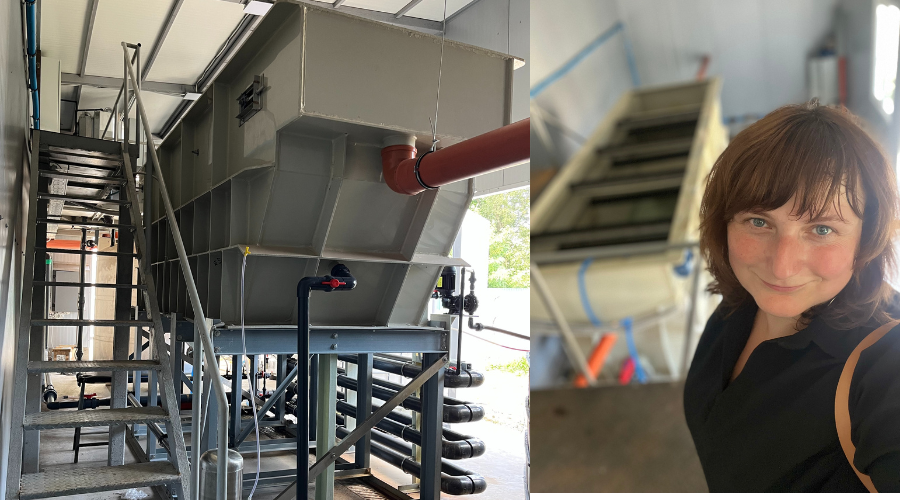
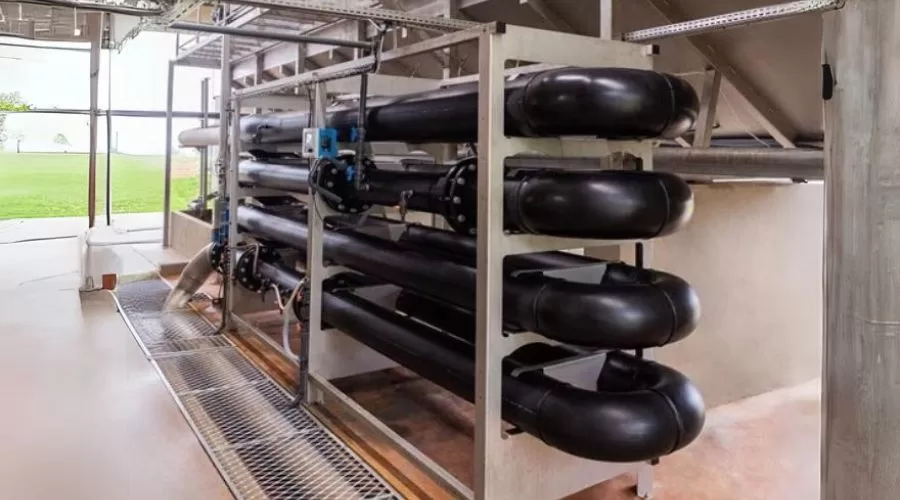
In practice, wastewater treatment plants usually consist of a system of sealed tanks and pipelines, compactly arranged on an industrial site. In addition to the treatment facilities themselves, access roads and sludge and excess activated sludge treatment units are also designed.
Design of industrial wastewater treatment facilities is carried out individually for each enterprise, based on:
- daily wastewater volume;
- hourly inflow pattern;
- level and type of contamination.
A properly designed treatment scheme reduces pollutant concentrations in wastewater to minimum permissible levels.
ZIKO LLC offers a range of industrial wastewater treatment systems suitable for all major industries, including food and beverage production, automotive manufacturing, mining, pharmaceuticals, petrochemicals, and energy generation.
If you need a consultation, please refer to the Contacts section.