
Ultrafiltration for Industrial Water Treatment

Water treatment technologies
Ultrafiltration for Industrial Water Treatment
Consistent water quality and equipment protection: the membrane retains suspended solids, colloids and bacteria without coagulants or settling tanks. Our projects range from a hotel complex to a community station for 1,000–2,000 m³/day.
- Pores 0.01–0.1 µm
- Backwash takes 5–10 minutes
- In-house laboratorywater analysis and testing
- 1,760+ completed projectsZIKO experience since 1993
- Up to 5-year warrantyon solutions and equipment, under the contract terms
- Service across Ukrainetechnical support and field service crews
Choosing a technology
Ultrafiltration or another treatment technology?
UF removes suspended solids and colloids and reduces turbidity and microbiological contamination. It does not reduce salts or hardness. UF is installed as a separate stage or as part of a combined treatment scheme.
| What needs removing | Mechanical filtration | Ultrafiltration | Reverse osmosis | UV disinfection |
|---|---|---|---|---|
| Mechanical impuritiessand, scale flakes, particles from 20 µm | removes | yes, but mechanical filtration before UF is mandatory | no: pretreatment needed | no |
| Turbidity and colloidsfine suspended solids, clay, oxidized iron | partly: down to 20 µm | removes | no: feed turbidity must be ≤ 0.3 NTU | no |
| Microbiological contaminationbacteria and protozoa | no | retains physically | retains, if the membranes are intact | inactivates, but does not remove |
| Salts and hardnessmineralization, scale | no | no: composition stays the same | removes | no |
| What goes to draincontinuous flow or batch discharge | backwash water | backwash water | concentrate, 15–30% of the feed water | nothing |
The result depends on the raw water, the equipment and the operating mode.
How we choose the technology
- Raw water: laboratory analysis and source type.
- Treated water requirements: what the water is for.
- Capacity: m³/h and m³/day.
- Operating mode: automation, continuity of supply.
- Costs: capital and operating, over the entire service life.
We run the analysis in our own laboratory and, if needed, process trials.
Industries where ultrafiltration can be part of the scheme
- Agriculture: poultry and livestock
- Car washes and AdBlue production
- Breweries
- Energy, CHP plants, industrial boiler houses
- Pharmaceutical and medical production
- Hotels, spas, restaurants, shopping malls
- Food processing
- Chemicals, cosmetics, household chemicals
- Other industrial production
- Crop farming, greenhouses, irrigation
- Water and soft drink bottling
- Distilleries and spirits production
- Textile and paper production
- Water utilities and municipalities
- Educational institutions
- Housing, condominiums, residential complexes
How it works
How industrial ultrafiltration works
A UF module is a bundle of thousands of hollow fibers. The membrane separates out suspended solids, colloids and bacteria.
Water path through the module
pores 0.01–0.1 µm
Under pressure, water passes through the porous wall into the fiber, while contaminants stay outside.
What is retained does not build up in the module: the backwash automatically flushes it to drain
The modules ZIKO uses have fibers 1.3 or 0.7 mm in diameter. The diameter determines how the module handles turbid water: thicker fibers clog less, thinner fibers fit more membrane area into the same housing.
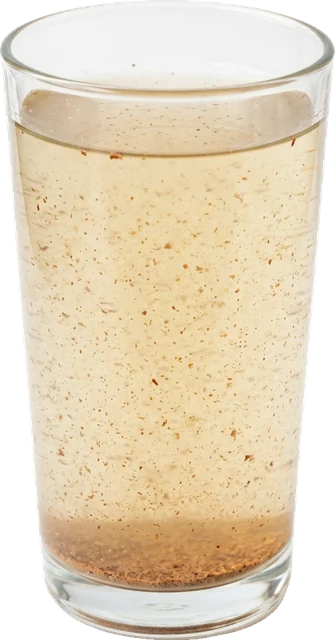
Water before the membrane: what UF retains
- Suspended solids and turbidity, fine mechanical impurities
- Colloids and high-molecular-weight organics
- Bacteria and protozoa
- Iron and other metals in particulate form
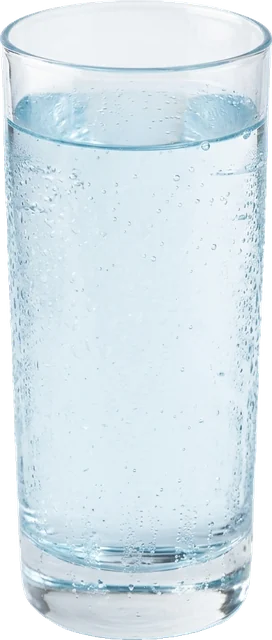
Filtrate after UF
- No suspended solids or bacteria: goes to the consumer or to the next stage
- Same mineral composition: the membrane does not change dissolved salts or hardness
What passes through needs another stage
- Dissolved salts, hardness and salinity: softening or RO
- Dissolved iron and manganese: iron removal before the membrane
- Nitrates and silica: RO
- Viruses: only partly, depending on the membrane; where a guarantee is needed, disinfection is installed after UF
Applications
Ultrafiltration in ZIKO combined solutions
From local systems to municipal water supply stations. UF almost never stands alone: mechanical filtration comes before it, and disinfection or RO after it.
- Mechanical filtrationsand, scale flakes, coarse solids130 · 100 · 20 µm
- Ultrafiltrationcolloids, organics, bacteria0.01–0.1 µm
- Nanofiltrationsome salts, multivalent ions0.001–0.002 µm
- Reverse osmosisdissolved salts, desalination< 0.0001 µm
Logarithmic scale: each division is a hundred times finer than the previous one.
Mechanical filtration → UF → disinfection
01. Surface water
Clear water with no suspended solids or bacteria, without coagulants or settling tanks
After rain and floods, the turbidity of rivers and reservoirs rises several times over. The membrane needs no chemical dose readjustment: only the cleaning frequency changes.
For municipal, domestic and industrial needs
Mechanical filtration → UF → reverse osmosis
02. Industrial plants
Turbidity ≤ 0.3 NTU and SDI₁₅ ≤ 5, recommended < 3: ZIKO requirements for RO feed water
UF works as a separate stage or as part of a combined scheme. It removes suspended solids and colloids and protects process equipment and the more expensive, more sensitive RO membranes.
Iron and manganese are removed before UF
Treated effluent → UF → disinfection or RO
03. Water reuse — ZIKO 360
Water for technical needs from treated wastewater
We polish effluent after the treatment plant and return the water to production. The membrane removes the suspended solids and microorganisms left after treatment. The result: less fresh water and less discharge.
The scheme depends on the effluent composition after treatment
Cleaning, automation and service
Ultrafiltration membranes: long service life without frequent replacement
Contaminants build up on the membrane and increase resistance. Automatic backwashes remove them, with chemical cleaning when needed. Cleaning frequency is set by the differential pressure across the module, not by the calendar.
Automatic backwashing
Remove fouling and maintain capacity without manual intervention.
Monitoring and automation
Parameter monitoring, mode control, protective algorithms, integration with the plant SCADA.
Membrane life
The membranes are designed to last for years. We replace them based on actual condition, not on a schedule.
ZIKO service
Commissioning, automation setup, scheduled maintenance.
Cleaning schedule
- Backwash
- 5–10 minwith treated water, about 1.5 bar
- Air scouring or chemically enhanced backwash in operation
- 10–20 minfor organics and silicates that are hard to wash off
- Full chemical cleaning
- 1–2.5 hfor heavy fouling
What the site needs
- Mechanical pretreatment
- mandatoryotherwise the fibers clog quickly
- Inlet pressure to the equipment
- at least 3 bar
- Backwash water disposal
- drain or sewer
After backwashing, water goes to drain with everything the membrane retained: suspended solids, colloids, microorganisms. We include its volume and disposal in the design together with the capacity. This determines how much raw water must be fed.
Experience
Industrial ultrafiltration: ZIKO projects of different scales
We handle the whole project: calculations, supply, installation, commissioning, staff training, warranty and service support.
Containerized ultrafiltration station
- The technology was chosen based on a laboratory analysis of the raw water
- The calculation took into account capacity, hydraulic conditions and automation
Ultrafiltration up to 150 m³/day
- The scheme was designed for the river water quality and its seasonal fluctuations
- The equipment sits in a plant room and is integrated into the complex’s utilities
Membrane system — 30 m³/h
- Water for the product, steam generators and heating
- The same pretreatment, cleaning and service requirements as for ultrafiltration
The capacities shown are examples, not limits: we size the system for your demand in m³/h and m³/day.
Need ultrafiltration for your site?Send us your water analysis and required capacity — we’ll size the system and estimate the capital and operating costs.
Get an engineering estimateCost
What determines the cost of ultrafiltration
We calculate the cost for each project from the water analysis, the required capacity and the treated water requirements.
What drives the figure
- Raw water. Turbidity, suspended solids, colloids, organics and seasonal fluctuations. They determine whether pretreatment is needed.
- Capacity and redundancy. Consumption schedule, peaks, operating mode, acceptable interruptions. If needed, we add standby equipment.
- Scope of supply and automation. Membranes, pumps, monitoring, SCADA integration. And what comes after UF: disinfection or RO.
- Water balance and operation. Water for cleaning, energy, chemicals, maintenance, backwash water disposal.
CAPEX: equipment, automation, design, installation, commissioning.
OPEX: electricity, water for cleaning, chemicals, maintenance, membrane replacement.
Our goal is a well-justified configuration, not the lowest upfront price. We are not tied to any single equipment manufacturer.
The alternative to UF for surface water is clarification by coagulation with a settling tank and filters. Its cost structure is different: chemicals, structure volume, sludge. So for the same source, it is worth calculating both options.
FAQ
Ultrafiltration: answers to common questions
Didn’t find your question? Ask an engineer using the form below.

Ultrafiltration or reverse osmosis?
UF retains suspended solids, colloids, bacteria and, depending on the membrane, some viruses. Dissolved salts, including hardness salts, pass through it. RO reduces dissolved salts and itself needs clean feed water. That is why UF is installed as a separate stage or ahead of RO.
Does ultrafiltration replace disinfection?
Partly. The membrane is a physical barrier to bacteria, but it has no effect in the network downstream and only partly retains viruses. Whether you need disinfection after UF depends on what the water is for and how it is stored and distributed.
Does UF remove iron?
Only oxidized iron, in particulate form. Dissolved iron and manganese pass through the membrane, so they are removed by iron removal upstream.
How often should the membrane be cleaned?
Cleaning is automatic, and its frequency is set by the differential pressure across the module. A backwash with treated water takes 5–10 minutes. Air scouring or a chemically enhanced backwash in operation takes 10–20 minutes. A full chemical cleaning for heavy fouling takes from 1 to 2.5 hours.
How long do ultrafiltration membranes last?
For years. Automatic cleaning and scheduled maintenance keep their performance stable. A membrane is replaced based on its actual condition, judged by an integrity test and operating data.
Do you need UF for well water?
Usually not. Groundwater is mostly clear, and its typical problems (iron, manganese, hardness) are not solved by ultrafiltration. UF makes sense where the water is turbid or microbiologically unstable. The final decision rests on the water analysis, not the source type.
Can ultrafiltration produce drinking water?
UF is an important stage in drinking water treatment: it removes suspended solids and reduces microbiological contamination. It does not remove dissolved chemical impurities, so on its own it only works with suitable water. We design the scheme from the analysis and the applicable drinking water standards.
Size an ultrafiltration system
Send us your water analysis, required capacity and treated water requirements. We’ll select the scheme and estimate CAPEX and OPEX. No analysis? We’ll do one in our laboratory. Consultation and preliminary estimate are free.
Phone: +38 095 93 21 273
Where to go next
Related technologies
- Mechanical water filtration
- Reverse osmosis (RO)
- Nanofiltration (NF)
- Water disinfection
Water sources
- Surface water: rivers, lakes, ponds, canals, reservoirs
- ZIKO 360 — reuse of treated wastewater